Saturday, December 31, 2005

Aulde lang flush

Last day of the year, 2005. Not a wonderful year for me personally and the world didn't fare much better (which will give you an idea of how bad my year was. So I'll be glad to flush 2005 down the old crapper. But how will I know it will really go down? Answer: miso, soy bean product and vegan mainstay.

I'm not big fan of miso, but I've discovered there is one thing it is definitely good for: testing the efficiency of a flush toilet. About that shortly, but speaking of Dick Cheney, how do toilets flush, anyway?

Most people don't know. I'm guessing they have some kind of vague mental image that when you push the toilet handle a trapdoor opens up somewhere and the contents of the toilet bowl fall through to the abyss. But that's not what happens.

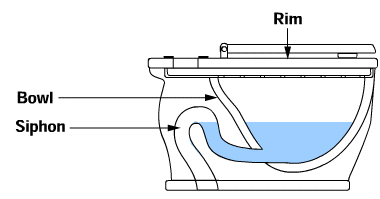
Most household toilets work using a bowl siphon. Yes, a siphon, just like you will be doing during the next gas crisis when you steal gas from your neighbor's car. You remember how you did that the last time, right? You put a tube into the gas tank and sucked some gas into it until the gas "went over the top of the bend" and, assuming the other end of the tube outside the car was lower than the level of the end in the gas tank, the siphon would empty out the gas in your neighbor's car into your gas can and you were on the road again (and also assuming you didn't suck the gas all the way into your mouth and wind up aspirating it and get an ensuing hydrocarbon pneumonitis).

So now we have three questions: (1) What makes a siphon work, anyway? (2) What does that have to do with flushing a toilet? (3) What does this have to do with miso?

(1) A siphon works by exploiting the difference in the weight of the water in the two columns. Here's a good way to visualize it. Suppose you have a length of chain, with an excess in a beaker and the rest running smoothly up over a pulley and back down to the table top. How take the beaker in your hand and raise it. You'll find that the chain "runs out" of the beaker, over the pulley and down to the table on the other side. That's because the length of chain on the other side of the pulley is longer when you raise the beaker on the near side up, and the longer chain is heavier and pulls chain from the "lighter" (higher) side. Here is a good set of pictures of the set up.

(2) So where is the siphon in a toilet?


You can see from this picture there is a siphon in back of the bowl. When you push the toilet handle down, water from the tank in back of the toilet (not shown in this picture) starts to fill the toilet bowl more quickly than the water can flow over the siphon bend, and water, seeking its own level both in the siphon tube and the bowl, completes the siphon and the bowl empties. In fact it empties more quickly than the water runs into it from the tank, which is sized just right so that it refills the bowl again after it empties. The amount of water running into the bowl is sized so that when it is finished running the level is below that needed to complete the siphon. The valve from the tank now closes and water from your plumbing connection refills the tank and you are ready to "go" again. This explains how you can flush a toilet just by filling it from a bucket of water instead of the tank (you didn't know that? try it at home). There's a nice animation here.

(3) Back to miso.
For decades, the toilet industry had a standard way of testing a toilet's flushing capabilities: tossing 3/4-inch plastic balls into the bowl and pulling the handle. But there was one problem: Toilets that are fantastic at flushing down 3/4-inch plastic balls sometimes falter under real-world conditions.

A few years ago, researchers began pondering a better test. After scouring grocery aisles for alternatives, they settled on using miso, which is made primarily of cooked soybeans.

Now, a group of water utilities and plumbing companies is pushing to make the miso test the new standard. This month, the group, which includes Kohler Co. and American Standard Cos., is rolling out a set of rules called UNAR -- that is Uniform North American Requirements for toilet fixtures -- which lay out a flushing standard that toilets have to meet. A key element of the suggested rules, which also include standards for toilet parts, is the use of a miso paste in testing.

[snip]

Since 1978, toilet makers had been using the plastic-ball test, which involved dropping 100 balls into the toilet; the toilet had to dispose of at least 75 in one flush to pass. (Cheryl Lu-Lien Tam, The Wall Street Journal)
The article is long, and for some, "too much information," so suffice it to say the test involves fashioning miso paste into a cylinder to test flushing efficiency. The UNAR standard is meant to be like the "Energy Compliant STAR standard" for electrical appliances. In the 1950s we used 5 - 7 gallons to flush a toilet (toilet flushing is the largest use of water in the home--by far). That was lowered to 3.5 gallons subsequently, and in 1992 the Energy Policy Act required all new toilets to use only 1.6 gallons per flush. This ushered in the era of the skidmark and the dreaded double-flush. Now, with better designs, low volume toilets are finally getting it together. But manufacturers, and likely regulators, will want a good test for flushing efficiency. UNAR's miso test stands (floats?) poised to become that standard.

One more thing. Miso is the efficiency tester that "dares not speak its name":
Most manufacturers are careful to call the substance "soybean media" at the request of the miso merchants who sell the product. (The miso companies also insist that toilet makers not mention their names in connection with their testing.)
I guess they don't want to be identified with siphons, used to steal other people's gasoline.

Back to the New Year's "business." Let's make 2006 the year we flush the friends of George, Dick, Rummy, Condi and the rest of that pile of crap clogging up our democracy. It'll take a double flush to get rid of the really big ones. 2008.

Friday, December 30, 2005

Chicken fingers pointing

A couple of days ago BirdLife International suggested avian influenza might be spread by using poultry manure as food in fish farms, something done routinely in Asia.
Known as integrated livestock-fish farming, the technique involves transferring the wastes from raising pigs, ducks or chickens directly to fish farms. At the right dosage, the nutrients in the manure give an enormous boost to the growth of plankton in the ponds, which are the main food of fish such as carp and tilapia.

BirdLife International is now calling for an investigation into the possibility that thousands of manure-fed ponds across Asia may be the means by which the new potentially deadly strain of avian influenza, H5N1, is being spread. BirdLife points out that outbreaks of H5N1 have occurred this year at locations in China, Romania and Croatia where there are fish farms. (The Independent)
This is a pretty interesting story, with intrigue and not very hidden agendas all over the place. The bird conservation community has been seriously exercised over the claim by WHO and the UN Food and Agriculture Organization (FAO) that wild migratory birds are vectors of bird flu, especially the H5N1 subtype. They fear (with some justification) that governments and localities will rashly carry out massacres of wild birds and try to deny them natural habitat. Even if these birds do carry the virus (and in our view it is likely they do), there is little anyone can do about it. You can't kill all wild birds nor would you want to. You could do a lot of environmental damage trying, however. So birders and ornithologists have been waging a full scale counter-attack on the notion, a counter-attack that often includes blanket denials that wild birds can be carriers.

The FAO, on the other hand, has been actively promoting integrated livestock-fish farming as a means to provide lower cost protein to the developing world. Another worthy idea. But the idea that virus contaminated poultry feces might be a source of contamination for wild birds and others makes both scientific and commonsense:
Although no mention has been made of the possible links between manure-fed ponds and influenza in the recent alarm over bird flu, the issue has been raised before, and the FAO, although actively promoting the technique, is well aware of the threat.

Its 2003 report, Integrated Livestock Fish Farming Systems, noted: "Recently, livestock and fish have been implicated in the irregular occurrence of influenza pandemics; the global impacts on public health of promoting livestock and fish integration are huge if these claims are substantiated."

In fact, the FAO may have been aware for very much longer that some scientists think there is a risk. The 2003 report includes a reference to a paper published in the journal Nature in 1988. This paper, by Christoph Scholtissek from the University of Giessen in Germany and Ernest Naylor from the University of Bangor in Wales, was titled Fish Farming and Influenza Pandemics. It said that bringing together fish farms with farm livestock "may well be the creation of a considerable human health hazard".

However, the FAO has continued to promoted integrated livestock fish farming actively throughout the ensuing period. (The Independent)
Now FAO is shooting back. Sort of. If you call being arrogantly dismissive, "shooting back." Their Chief Veterinary officer, Dr. Joseph Domenach told Reuters it was a "theoretical risk" but would only be a local problem for birds that used the contaminated pond. Adequate surveillance would take care of the problem, he said. As for wild birds:
"Today it's impossible to say that wild birds are not playing a role," said Domenech. "We hope in three to four months, at the end of this migration period, we will see better."
Of course what if they are both right: infected poultry feces are contaminating ponds where migratory birds drink and then spread it elsewhere. I don't think either side would be satisfied with that compromise because each blames the other as a means to protect its own concerns.

Ask Not for whom the Chicken Fingers point. They point for Thee.

Mileage-based car insurance?

I don't drive that much and it is mostly city driving. If my community had decent public transport to my job I'd probably take that. But I know people who drive a lot, commuting one to two hours a day to work and the same back. They are at greater risk for an accident than I am because they are on the road more. But they usually pay less car insurance because their cars don't get stolen as often. They deserve the break in theft insurance because their risk is less. Why don't I get a similar break on accident insurance because I drive less?

A Japanese insurance company is now offering car insurance keyed to miles driven, determined by a device in the policy holder's car:
Pay-as-you-drive insurance (or PAYD) offers huge advantages over the all-you-can-drive policies that dominate the U.S. First of all, PAYD is fairer, since it doesn't force low-mileage drivers to subsidize people who drive a lot. Generally speaking, crash risk accrues by the mile: People who drive more crash more. But most insurance policies don't sufficiently account for the differences in risk -- meaning that low-mileage drivers overpay for insurance, while high-mileage drivers underpay. Even the policies that give a price break to relatively low-mileage drivers don't close the gap: People who don't drive much still get shafted.

Not only is pay-by-the-mile insurance fairer to low-mileage drivers, it also creates an automatic disincentive for extra driving: Just as an all-you-can-eat buffet makes it more likely that you'll gorge yourself, all-you-can-drive insurance policies make it likely that you'll drive more. Because most people pay more for their car insurance than for gas, PAYD has roughly the same effect on driving as a doubling in the price of gas.(via Gristmill)
Of course I don't live in Japan. But Gristmill now tells me that California is contemplating a similar scheme. And there is an Environmental Justice bonus as well. Minorities who live in urban neighborhoods won't be paying higher rates for accident insurance than suburban drivers with similar records. As Gristmill points out, this isn't a reality yet:
Obviously, this is not yet a done deal. But it's still promising -- because it could make the automotive insurance system fairer to people who don't drive much (notably women, the poor, and city-dwellers), and because it could give all drivers the opportunity to control their insurance costs by driving less.
Sounds like the only ones who don't win on this one are the oil companies. It's a good thing they don't have much influence with the government.

Thursday, December 29, 2005

Charlie the Tuna and states rights

Congress has come up with a fix for a daunting problem: the worry that comes from consumers, especially pregnant women, about whether the food they eat will harm their unborn babies. It turns out the solution is incredibly easy: eliminate the warnings. Brilliant, as usual.

Here's how it's supposed to work, according to legislation approved by the House Energy and Commerce Committee shortly before Congress adjourned for the Christmas recess. All 50 states have laws that require point of purchase food safety notices of one kind or another. Under the bill introduced by Republican Mike Rogers of Michigan and co-sponsored by 200 of his closest friends and accomplices (with the encouragement of numerous lobbyists), some 80 laws in 37 states would be eliminated, pre-empted by Federal authority. That will improve interstate commerce by eliminating the confusion of separate food safety warnings in the different states. You have to admire the flexibility and pragmatic attitude of "states rights" Republicans. They aren't bound by principle.

Of course there is a little more to it. Like tuna. Because in fact the main target is California's attempt to put strong warnings on tuna because of mercury contamination. Mercury is a known neurotoxin, and a series of landmark studies conducted in the Faroe Islands by Philippe Grandjean and his colleagues has shown that levels of mercury commonly encountered by consumers may have effects on fetal development.

California is being sued by the Tuna Foundation and their suit was joined by the FDA. And you thought the FDA was on the side of consumers? Silly you. Did you forget about Vioxx? At issue is the belief by independent scientists, the American Public Health Association and the American Medical Association that the current FDA mercury advisory is not protective and would allow exposures of an estimated 600,000 fetuses above current EPA reference levels.

Attempts by Democrats to postpone or modify the gutting of state control over food warnings were to no avail. Representative Lois Capps, a Democrat representing Santa Barbara in southern California tried to exempt state laws dealing with birth defect warnings but was defeated 32 - 31. California Democrat Henry Waxman's amendment to permit states to help parents limit their children's exposure to cancer-causing agents or developmental toxins was also defeated, 26 - 19.

But did you expect anything else from the Republican controlled congress? Sorry, Charlie.

Hospitals, churches but no wiretaps, just death

If irony isn't dead in the Bush administration is in a Persistent Vegetative State, so one isn't surprised to find the following defense of Bush's wiretapping of American citizens:
"This is not about monitoring phone calls designed to arrange Little League practice or what to bring to a potluck dinner," he told reporters. "These are designed to monitor calls from very bad people to very bad people who have a history of blowing up commuter trains, weddings, and churches."(Reuters via AmericaBlog)
I am certain those aren't the American citizens being wiretapped. Blowing up weddings and churches [do mosques count?]" by US citizens does occur, of course. We do it from the air:
Despite widespread Iraqi casualties, household interview data do not show evidence of widespread wrongdoing on the part of individual soldiers on the ground. To the contrary, only three of 61 incidents (5%) involved coalition soldiers (all reported to be American. . . ) killing Iraqis with small arms fire. . . The remaining 58 killings (all attributed to US forces by interviewees) were caused by helicopter gunships, rockets, or other forms of aerial weaponry. (my emphasis) (post in Effect Measure)
WaPo makes the same point:
U.S. Marine airstrikes targeting insurgents sheltering in Iraqi residential neighborhoods are killing civilians as well as guerrillas along the Euphrates River in far western Iraq, according to Iraqi townspeople and officials and the U.S. military.

Just how many civilians have been killed is strongly disputed by the Marines and, some critics say, too little investigated. But townspeople, tribal leaders, medical workers and accounts from witnesses at the sites of clashes, at hospitals and at graveyards indicated that scores of noncombatants were killed last month in fighting, including airstrikes, in the opening stages of a 17-day U.S.-Iraqi offensive in Anbar province. (Washington Post)
Weddings?
Friday, October 8, 2004 Posted: 1:02 PM EDT (1702 GMT) An airstrike killed 14 people and wounded 16 during a wedding party, according to hospital officials in the unstable city of Falluja, but the U.S. military said its planes had targeted a terrorist safe house.

An emergency room doctor said the strike killed the groom and wounded several women and children.

The U.S.-led coalition statement had reported an airstrike at 1:15 a.m. on a safe house in northwest Falluja where terrorist leaders linked to Abu Musab al-Zarqawi were meeting.

People are still searching for bodies underneath the rubble of the house, neighbors told a CNN journalist in the city.

The city's hospital said it received the dead and wounded from the wedding party around 2 a.m. (6 p.m. ET). (CNN)
Or this:
BAGHDAD, May 24 (Reuters) - New video footage showing Iraqis singing and dancing at a desert wedding raised more questions on Monday about a U.S. air strike last week that killed about 40 people.

The U.S. military insisted most of the dead were foreign guerrilla fighters who had slipped over the nearby Syrian border. Local people say the Americans massacred wedding guests.

"We still don't believe that there was a wedding or a wedding party going on when we hit in the early hours of the morning," a senior military official said, adding that daylight scenes on film might be of a wedding held there the day before.

Associated Press Television News said it obtained the footage from a survivor of the strike early on May 19.

The U.S. military says troops found no signs of a wedding in the wreckage left at the remote hamlet of Mogr al-Deeb. But a spokesman, Brigadier General Mark Kimmitt, conceded on Saturday that six women were killed in the strike and a celebration may have been taking place: "Bad people have parties too," he said. (Iraq Today)
Mosques?
Coalition forces fired upon a mosque compound in Fallujah that officials said was a safe haven for enemy fighters on Wednesday as U.S. Marines continued their advance into northern areas of the city.

Marines waged a six-hour battle around the mosque with militants holed up inside before a Cobra helicopter fired a Hellfire missile at the base of its minaret and an F-16 dropped a bomb, said Marine Lt. Col. Brennan Byrne.

There is no report of civilian casualties, the military said, disputing earlier witness accounts that as many as 40 people died. (FoxNews)
Commuter trains? OK. We have no reports of US military forces bombing commuter trains.

But the weddings, mosques and trains aren't really the point. The deadliness of aerial bombardment is. As everyone familiar with anti-insurgency warfare knows, civilian deaths are inevitable when bombs are loosed through the air. It is as sure as the civilian casualties that come when insurgents attack police stations or symbols of the US occupation, like hotels. The insurgents may not be aiming for civilians but they know they will hit and kill innocent people. So does the US military. No matter how much they may "regret" the loss of innocent life, to them it is necessary but unfortunate collateral damage. As it no doubt is to the insurgents.

Here is the problem in all its terrible ambiguity:
The number of airstrikes carried out each month by U.S. aircraft rose almost fivefold this year, from roughly 25 in January to 120 in November, according to a tally provided by the military. Accounts by residents, officials and witnesses in Anbar and the Marines themselves make clear that Iraqi civilians are frequently caught in the attacks.

On Nov. 7, the third day of the offensive, witnesses watched from the roof of a public building in Husaybah as U.S. warplanes struck homes in the town's Kamaliyat neighborhood. After fires ignited by the fighting had died down, witnesses observed residents removing the bodies of what neighbors said was a family -- mother, father, 14-year-old girl, 11-year-old boy and 5-year-old boy -- from the rubble of one house.

Survivors said insurgents had been firing mortars from yards in the neighborhood just before the airstrikes. Residents pleaded with the guerrillas to leave for fear of drawing attacks on the families, they said, but were told by the fighters that they had no other space from which to attack.

Near the town of Qaim one day last month, a man who identified himself only as Abdul Aziz said a separate U.S. airstrike killed his grown daughter, Aesha. Four armed men were also found in the rubble of her house, he said.

"I don't blame the Americans. I blame Zarqawi and his group, who were using my daughter's house as a shelter," said Abdul Aziz, referring to Abu Musab Zarqawi, leader of the foreign-dominated group al Qaeda in Iraq.

Abdul Aziz spoke beside his daughter's newly dug grave, in a cemetery established for the 80 to 90 civilians who Anbar officials said were killed in the first weeks of the offensive. Several dozen new graves were evident, and residents said more than 40 victims of the fighting were to be buried that day alone. Witnesses saw only 11, all wrapped in blankets for burial. Residents said two of the 11 were women.

Abdul Aziz's grandsons ascribed blame for their mother's death more pointedly. "She was killed in the bombing by the Americans," said Ali, 9, the oldest of three brothers. (WaPo)
That last sentence, however one ascribes blame or motive, is the bare truth: "She was killed in the bombing by the Americans." Predictable in every sense of the word. As predictable as the loss of innocent life in an insurgent attack in a crowded city. But on a bigger scale and even more impersonal. And if the reason is oil or geopolitics (as many of us believe), how morally defensible?

Obviously a rhetorical question.

Wednesday, December 28, 2005

Role of migratory wild birds and what to do about it (if anything)

The problem of H5N1 virus traveling the globe via migratory birds has been, shall we say, contentious. Because migratory birds have a constituency--birders and ornithologists. Which is a good thing for the birds and ultimately a good thing for flu science. Ultimately. I think the evidence implicating movement of the virus via migratory wild birds is fairly good, maybe even compelling. But I would have to agree there are many major uncertainties as well.

The principal argument of the bird community seems to be that birds sick with avian influenza cannot fly far. But there is also good evidence that the virus is highly pathogenic for some bird species and not others. So this argument isn't persuasive. The argument that if they are truly a source of infection we should see outbreaks throughout their migration paths seems more plausible, but surveillance is not that good in many of these areas, nor do we know the spatial patterns of viral shedding. The fact that outbreaks have occurred where there is no evidence of migratory birds means that either we haven't detected the presence of those birds, or more likely, that there are other ways of spreading the disease, of which spread via wild birds is only one, but an important one for geographic dispersion.

But it is true that there is much to learn, and taking precipitous action in the face of this kind of uncertainty may do more harm--perhaps much more harm--than good. Culling of wild birds or destruction of their natural habitat, as has sometimes been suggested, is neither feasible nor likely to succeed, even if it could be done. What it would almost certainly do, however, is contribute further to the already alarming deterioration of our environment and its biodiversity.

If migratory birds are indeed spreading the virus, as seems likely in some instances, there is not much we can do about it except recognize the importance of surveillance along the migratory pathways and get ready for the consequences. Reform of industrial poultry raising practices and control of indiscriminate spreading of poultry manure also seem like sensible things.

I don't think that wild birds are innocent of spreading this virus and I think denying this is not productive. What we need is some clear thinking about what can and should be done about migratory birds--if anything. It is possible--and I think likely--that this is a variable we cannot control and attempts to do so will turn out to be harmful.

Bird flu and peace in the Middle East?

Could one of the species of wild migratory birds carrying bird flu be a white dove of peace? Dr. Alex Leventhal, the Director of Public Health Services in the Israeli Ministry of Health thinks there's a chance, and I hope he's right:
"We don't know when, but it is predictable," he says. "The migratory birds pass over Israel, Palestine and Jordan twice a year. We are speaking about more than five hundred million birds of which some may be carriers of the virus. This scenario, which we are afraid of, is possible. This is what occurred in Romania, Turkey and Croatia," explained Leventhal.

Dr. Leventhal is challenged by several difficult elements in his daily battle preparing for avian flu. "The problem is that the migratory birds descend for less than one day and fly away again. They may come in contact with poultry and perhaps transmit the virus to them. The disease in poultry is contagious and fatal to the husbandry" warned Leventhal. (ynetnews)
An avian influenza epidemic amongst poultry would be an economic disaster for the region, not Israel alone. And a pandemic would be as serious here as everywhere else and require international cooperation and coordination and mutual aid.
"We are working together with the Palestinians and the Jordanians. We met with the Jordanians on the King Hussein Bridge. Also, there was a meeting with Palestinian officials from the Ministry of Health including the veterinary services in Beit El in Ramallah. The Jordanians suggested a tripartite meeting which we will organize within a week," Leventhal said.

"We decided the Israelis, the Jordanians and the Palestinians should share strategic plans and try to work in conjunction. We have good cooperation with the Palestinian Authority. There are excellent professionals like Dr. Asa'd Ramlawi and Dr. al-Masri.

We told them that we are ready to help them to be able to handle their situation. My teacher taught me an Arabic proverb, ‘A close neighbor is better than a distant brother.’ I hope to see other countries like Lebanon, Syria, and Egypt working with us as well."
The world has only had a "national system" (i.e., been organized into nation states) for about 400 years. The threat of epidemic infectious disease shows that system has severe limitations. How the hard won nationalist aspirations of Palestinians and Israelis will cope with this is uncertain, but overwhelming outside events often force arrangements not conceivable in other ways. Nationalism has been a major vehicle for political advance and the liberation of peoples from colonial yokes. But it is also a tribalism with baneful consequences.

Israelis and Palestinians are both close friends and not-so-distant brothers and sisters. If the threat of an avian flu pandemic weakens these regional nationalisms at this juncture, so much the better as far as I am concerned. An effort by Israeli and Palestinian public health professionals to build bridges is a good step. Take a look at their magazine, bridges.

Tuesday, December 27, 2005

The whole truth

In sworn testimony in an employment lawsuit Dr. Edmund Tramont, head of AIDS research at the National Institute for Allergy and Infectious Diseases (NIAID/NIH) did what he was supposed to do: told the truth about Big Pharma and the AIDS vaccine.
In an unusually candid admission, the federal chief of AIDS research says he believes drug companies don't have an incentive to create a vaccine for the HIV and are likely to wait to profit from it after the government develops one.

And that means the government has had to spend more time focusing on the processes that drug companies ordinarily follow in developing new medicines and bringing them to market.

"We had to spend some time and energy paying attention to those aspects of development because the private side isn't picking it up," Dr. Edmund Tramont testified in a deposition in a recent employment lawsuit obtained by The Associated Press.

[snip]

"If we look at the vaccine, HIV vaccine, we're going to have an HIV vaccine. It's not going to be made by a company," Tramont said. "They're dropping out like flies because there's no real incentive for them to do it. We have to do it."

"They will eventually — if it works, they won't have to make that big investment. And they can make it and sell it and make a profit," he said. (AP via Canadian TV)
As Tramont acknowledged in a follow-up email to the AP, this isn't just a problem for the AIDS vaccine, but vaccines in general. The countries that are most in need cannot afford to pay enough to result in the obscenely high profits drug companies can make selling impotence drugs or psychoactive agents that are taken on an ongoing basis, so they wait for taxpayers to pick up the research and development costs and if it suits them, they move in later to scarf up the profits.

The Republican congress, led by Senator Bill ("Dr. Quackenbush") Frist has come up with a perfect solution. Indemnify or immunize the pharmaceutical industry prospectively against lawsuits (using the need for incentives) while letting them profit from the publicly sponsored research as before.

We've said it before and we'll say it again: if the "market" doesn't work, don't interfere with the market by forcing it (see here and here). As with other matters of national defense, produce the vaccines with public funds or under the usual contract mechanism instead of letting Big Pharma gain exclusive rights via licensing and patents to which they are not entitled.

Monday, December 26, 2005

Happy New (flu) Year

If you live in the southwest of hte United States you have probably noticed that seasonal influenza is here:
During week 50 (December 11 – December 17, 2005)*, influenza activity continued to increase mostly in the southwestern United States. One hundred sixty-nine (8.9%) specimens tested by U.S. World Health Organization (WHO) and National Respiratory and Enteric Virus Surveillance System (NREVSS) collaborating laboratories were positive for influenza. The proportion of patient visits to sentinel providers for influenza-like illness (ILI) was above the national baseline. The proportion of deaths attributed to pneumonia and influenza was below the baseline level. One state reported widespread influenza activity; 5 states reported regional influenza activity; 2 states reported local influenza activity; 33 states, New York City and the District of Columbia reported sporadic influenza activity; and 9 states reported no influenza activity. (CDC)
In Maricopa County (Arizona) some Emergency Rooms have wait times as long as 12 hours. Over 80% of the year's flu cases has come in the last two weeks (station KOLD via East Valley Tribune/Scottsdale Tribune). In El Paso, Texas the situation is similar:
The flu season is in full swing, as Luis Calvo, who has the flu noticed while he waited in the packed waiting room at the at the Franklin Medical Clinic for hours to see a doctor.

Doctor Andres Enriquez at the Franklin Medical Clinic says his waiting room was so packed that for most of the day there was standing room only and some people actually had to wait outside of the building.

According to Dr. Enriquez 90 percent of the patients he saw on Christmas Eve had the flu like Luis.
And it is not just Dr Enriquez that is seeing more patients. In fact 24 hour pharmacies like Walgreen's saw longer lines this holiday weekend.

"We have seen an exceptional increase in people with various respiratory complaints the reason why we know it appears to be a flu problem is because there has been an increase of people with prescriptions for Tami-flu," says Allen Hrich, a Walgreen's Pharmacist.

But, flu patients not only lined-up to get Tami-flu, they are also looked for other drugs like Suda-fed which you used to be able to get off the shelf, but because of the meth problem you now have to get it from a pharmacist. (KFOX-TV)
The interaction with the substance abuse problem (Sudafed being made into meth) and the stress on the medical care delivery system with even a mild uptick in flu cases shows once again how the public health and social services infrastructures areinterconnected in ways that don't allow us to "target" discrete areas (like antiviral stockpiling or vaccine production and distribution) as ways to respond to an influenza pandemic. Unfortunately we cannot except consumer protection from that list, either:
It was the kind of event companies hold all the time. ExxonMobil had a health fair for its refinery workers in Baytown, Texas, and offered free flu shots. Only the people hired to administer the shots were not qualified health-care professionals and the vaccines they gave were purified water.

[snip]

This year in Texas, U.S. Atty. Chuck Rosenberg said a Houston businessman, Iyad Abu El Hawa, and his alleged accomplice, Martha Denise Gonzales, were indicted on charges of giving fake flu shots. The two suspects were charged last month with conspiracy and tampering with consumer products; they had allegedly inoculated about 1,100 ExxonMobil employees as well as 14 nursing home patients. El Hawa and Gonzales have pleaded not guilty.

In Alabama, the state Attorney General's Office announced this month that it had cited a Montgomery physician for giving more than 90 fake vaccines. Dr. Zev-David Nash has surrendered his medical license to authorities and is accused of injecting his patients with a harmless saline solution.

According to The Associated Press, Nash gave investigators a box of syringes and a written statement detailing how he substituted the saline solution for flu vaccines at a flu shot clinic he held at a Montgomery bank.

Rosenberg said the complaint in Texas charges El Hawa with attempting to defraud Medicare by administering flu vaccines when none were given.

El Hawa owns Comfort & Caring Home Health and operates two other home health centers in Houston, Rosenberg said. He does not have a medical license and has no formal training or license to dispense medicine. Neither does Gonzalez, whom Rosenberg said worked in a non-medical position in a physician's office and for El Hawa.

Officials said they were trying to determine how El Hawa received the contract from ExxonMobil to administer flu shots at the health fair. (Chicago Tribune)
So the regular (seasonal) flu season in upon us. It is expected to peak in late January or early February. It's not an avian flu pandemic, but it's an opportunity, as seasonal flu hits your community, to ask yourself what it would be like if it were three, four or five times worse. Then get busy in case that happens later this year, next year or the year after.

A good place to start is The Flu Wiki.

Heckuva job, Dennis

In a long, superb, and frankly shocking article in the Wall Street Journal (subscription only), Peter Waldman details how a consultant ghostwriter successfully cast doubt on an important Chinese study of the cancer causing effects of chromium VI.

The story starts forty years ago when Dr. Zhang Jian Dong was sent for "re-education" into the countryside during the Cultural Revolution. The rural area he found had groundwater contamnated by chromium wastes from a state-owned smelter.

The well water was yellow.
People were developing mouth sores, nausea and diarrhea. Dr. Zhang spent the next two decades treating and studying the residents of five villages with chromium-polluted water.

In 1987, he published a study saying they were dying of cancer at higher rates than people nearby. He earned a national award in China for his research. In America, federal scientists translated it into English, and regulatory agencies began citing it as evidence that a form of the metal called chromium-6 might cause cancer if ingested. (Peter Waldman, WSJ, December 23, 2005, p. A1)
Dr. Zhang retired, but in 1997 published what amounted to a retraction of his work in The Journal of Occupational and Environmental Medicine.
For years, scientists thought chromium-6 in drinking water might, at some level of exposure, pose a cancer risk. The first Zhang study, while recognized as flawed, was one reason for this view. Now many scientists think the metal doesn't pose this risk, and once again a Zhang report is a factor behind their view. How risky the metal actually is or isn't matters, because it has shown up in soil or water in parts of 37 states, according to the U.S. Agency for Toxic Substances and Disease Registry.
But now court documents indicate Dr. Zhang didn't write the second article. He allegedly saw a Chinese translation of an early draft, was paid $2000 as a consultant by utility-hired scientists who did write it, and they then slapped his name on it (but not the source of funding or any of the true authors' names). The utilities who paid for it were being sued for chromium pollution.

Dr. Zhang is now dead, but it is known he disputed a statement in the paper that the drinking water was not responsible for the cancers. The revisionist study is now under attack by scientists:
Regulators in California, after investigating the second Zhang report, have concluded it is dubious. They have reverted to the original dark view of chromium-6 and are moving to propose a strict limit on it in ground water. The action could ultimately require a costly cleanup, because a third of wells tested in the state exceed the envisioned limit. Costs would grow if other states followed California's lead.

The conflicting Zhang studies show what can happen when the line between advocacy and science blurs. The consultants pursued the second round of Chinese research with the clear aim of rebutting California plaintiffs' arguments, court documents show. But once that second report entered the realm of peer-reviewed science literature, it took on a life of its own in regulatory assessments of the chemical.

The consultants who worked on the second report defend it as good science. And, rejecting the notion that they ghost-wrote it, they say that Dr. Zhang was kept informed of what it said through phone calls and through an early draft that was translated into Chinese for him.
So we know Zhang only saw an early draft, objected to some statements that found their way into the final version, and his name was falsely (and perhaps fraudulently) affixed to the paper as senior author.

Who were the authors of the study, then? The good folks at ChemRisk, prominent consultants who have become wealthy in the "doubt industry," scientists whose objective is to manufacture uncertainty about science inconvenient for their corporate clients.
A ChemRisk biostatistician wrote in a 1995 internal memo that he foresaw two "products" for PG&E from ChemRisk's work with Dr. Zhang. One was a report that could be the basis for trial exhibits showing "the absence of the association between cancer and groundwater exposure to hexavalent chromium," said the memo. Like many others, it is on file in state court in Los Angeles County, where PG&E -- the defendant in the Erin Brockovich case -- is again facing litigation by residents alleging chromium pollution.

The other product, wrote the ChemRisk scientist, William Butler, would be a report to be submitted to a peer-reviewed journal, with Dr. Zhang as the lead author. Dr. Butler requested a budget of $25,000, which he said would cover 60 hours of his own time to, among other tasks, "interpret data" and "write reports." He budgeted Dr. Zhang's contribution as "research assistance."

Dr. Butler added: "It is at times difficult to convince Dr. Zhang of the importance to us of the specific details of his studies so that we can execute our own analyses."

Three weeks later, ChemRisk faxed Dr. Zhang a draft of a new study of the five villages, translated into Chinese. While reiterating the overall higher cancer death rate, it offered ChemRisk's new analysis saying village distances from the smelter didn't always correlate with death rates. Dr. Zhang wrote back that "I totally agree with what you wrote: 'There is no positive correlation between cancer mortality and the distance of the village to the pollution source or the level of contamination.' "

However, Dr. Zhang had previously told ChemRisk he never tried to assert such a link. And after reading the draft, he told the firm he didn't accept its conclusion that "lifestyle of the residents and other environmental factors unrelated to chromium contamination" might explain the overall higher death rate for the contaminated area.

"This is only an inference; it is inappropriate to consider it as a cause," he wrote to ChemRisk, in a letter filed in California state court. Dr. Zhang instructed the consulting firm to replace that assertion with a vaguer one mentioning several possible variables, as well as the need for more research.

Yet the report, as later published, even more strongly linked the higher cancer mortality to lifestyle and other non-chromium factors. Instead of saying these might be the cause, the published report called them the "likely" cause.

The published report then went further and stated flatly that the higher rate of cancer death in the five villages was "not a result of the contaminated water." Neither stomach-cancer nor lung-cancer deaths "indicated a positive association with hexavalent chromium concentration in well water," the published article said. Neither of those statements was in the draft that was translated into Chinese for Dr. Zhang to read.
These are just a few of the nasty items in Waldman's long and detailed article. If you can get access, read the whole thing. There is another long report at the Environmental Working Group website.

ChemRisk is run by hired-gun toxicologist Dennis Paustenbach, and he was eminently satisfied by the results:
The 1997 article began to influence scientific views. In 2000, the U.S. Agency for Toxic Substances and Disease Registry updated its chromium profile, adding a paragraph about the 1997 study. The passage concluded with the concept Dr. Zhang had pointedly rejected in his memo to ChemRisk. The entry said the 1997 study's authors "commented that these more recent analyses of the data probably reflect lifestyle or environmental factors, rather than exposure to chromium(VI)."

Soon other bodies, such as the Environmental Protection Agency and the California Department of Health Services, also cited the second study to that effect. A 2001 report by a special panel of scientists for the state of California discussed the 1997 paper and concluded there was no need to tighten chromium-6 standards.

Dr. Paustenbach, the ChemRisk founder, served on this panel. He resigned before its report was issued because of a public flap over a perceived conflict of interest, since his firm was a consultant to chromium defendant PG&E.

When the panel's report came out, Dr. Paustenbach emailed it to his former colleague Dr. Kerger, with a note: "Buy a good bottle of wine, pull up a chair...and then read this. Then, say to yourself 'Yep, I really finally did something good for society.' "

[snip]

Meanwhile, the second Zhang study is still having an influence.

Ore-processing plants in northern New Jersey once produced millions of tons of chromium waste that was used as landfill throughout Hudson and Essex counties near New York City. Chromium-6 has turned up in Jersey City Little League diamonds and, this fall, near the Weehawken-Manhattan ferry terminal.

ChemRisk's Dr. Paustenbach has been instrumental over the years in persuading New Jersey regulators to ease cleanup standards for the metal. An article he co-wrote was cited in a recent New Jersey report that concluded it still wasn't known whether chromium-6 is carcinogenic when ingested. One plank of the Paustenbach argument: that Dr. Zhang's "follow-up study" didn't find a cancer link.
Heckuva job, Dennis. Sigh.

Sunday, December 25, 2005

Sunday Sermonette: a Christmas card

Christmas Sunday. No mail today, but I can still deliver this description of a really delightful--and truly lovely--Christmas card sent out by John Snyder of the Citizens Committee for the Right to Keep and Bear Arms:
Santa Claus points a handgun at a masked terrorist on a Christmas card that John Michael Snyder, public affairs director of the Citizens Committee for the Right to Keep and Bear Arms, sends this year to a number of recipients.

Named Dean of gun lobbyists by The Washington Post and The New York Times, Snyder includes the president and members of Congress as addressees.

The card wishes recipients a Christmas of peace and joy and a New Year of triumph over terrorism.

The card presents Santa guarding a group of small children from a bomb-harnessed suicide killer. The bomber appears ready to cast a stick of dynamite at an image of the Infant Jesus beneath a decorated Christmas tree.

Snyder thinks the original drawing conveys a definitive holiday message in keeping with these difficult times.

Terrorists are out to destroy personal freedom and undermine traditional values associated with Santa Claus and the Christmas Creche, he says. (via USNewswire)
And Merry Christmas to you, too, John.

23 versions of a 22 meme

I got tagged with a meme by Matt Stoller of MyDD, so it's my turn. Here it is:

Four jobs you've had in your life: paperboy; hospital orderly/transport; doctor at an earpiercing clinic; professor

Four movies you could watch over and over: Casablanca; Maltese Falcon; Roger and Me; Salt of the Earth

Four places you've lived: Lund, Sweden; Baltimore; New York City; Cambridge, MA

Four TV shows you love to watch: The Daily Show; Perry Mason (the old series); The Avengers; Beat the Press (Friday version of Greater Boston)

Four places you've been on vacation: Bologna; Paris; Charleston, SC; Barcelona

Four websites you visit daily: Atrios, DailyKos, MyDD, Majikthise

Four of your favorite foods: Spaghetti (almost any sauce); Lasagna (Bolognese version); Corned beef on rye at a NY deli with Dr. Brown's Celray and half sour pickle; Swedish yeast bread with cardamom (Kardemumma bröd)

Four places you'd rather be: Barcelona; Manhattan; Kiawah Is.. SC; Paris

Passing it on to Melanie, DemFromCT, Lindsay, Cervantes

Saturday, December 24, 2005

Chinese bird flu transparency: two steps forward, one step back?

Maybe we spoke too soon. No, we definitely spoke too soon when we noted China's improving reputation for "transparency" on the bird flu front:
A senior World Health Organization official complained Friday that China has not shared with his agency any samples of a deadly bird flu virus strain from its dozens of outbreaks in poultry.

WHO's Asia-Pacific Director Shigeru Omi said that sharing samples of the H5N1 virus is crucial to diagnosing new cases, and to developing a vaccine that could prevent a possible pandemic in humans.
China's Ministry of Agriculture shared five samples collected from infected birds last year but has failed to provide any this year, Omi said.

"From the more than 31 reported outbreaks in animals from 2005, no (Chinese) viruses have been made available so far for the international community," Omi said. "Time is of the essence."

China's Ministry of Health agreed this week to give the WHO samples isolated from two of its six confirmed human cases of bird flu.

Jia Youling, director of the Chinese Agriculture Ministry's veterinary bureau, which has led China's efforts against bird flu, declined to respond to Omi's remarks. He referred questions to his ministry's press office, which did not return phone calls. (AP via Mercury News)
What is somewhat odd about this report, however, is that it was also reported this week that the Chinese had handed over some viral samples from recent human cases. Apparently the way to reconcile these reports is that they have handed over none of the poultry viruses.

Trying to unravel the genetic changes affecting the poultry panzootic in asia is critical to tracking the the virus and its pandemic potential.
Scientists have determined that bird flu strains in Vietnam and Thailand resemble each other, while a distinct second strain has affected birds in China and Indonesia.

A potential third strain may have affected birds and sickened at least one human in northeast China's Liaoning province, Omi said.

"The outcome of this battle in China has ramifications not only for the region but also for the entire world," he said. "Maybe in China there are two sub-strains, maybe more," he said. "We don't know."
Well maybe the Chinese know. It would be nice to share the knowledge, or if they don't have it, provide samples for others to generate.

This is not a question of withholding genetic sequence data, which apparently the Chinese have provided. The problem is connecting the sequence data with the biology--for example host range, virulence, etc. This cannot be done from the sequences alone, at least not yet. As we noted in another post, there can be complicated reasons for not sharing the actual virus--reasons related to commercial exploitation, fear of having one's "resource" appropriated by foreign laboratories or countries, national pride, etc. Whatever the reasons--and some of them no doubt have merit from the Chinese point of view--it is time to put them aside, perhaps with some explicit codicil to protect whatever concerns the Chinese have.

No one knows how much time we have to generate the information that will help the world cope with a possible pandemic. But the more time and the more heads and hands working on the problem the better off everyone will be.

Friday, December 23, 2005

Benzene out, cadmium in

Now that the huge slug of benzene has flowed out of China and into Russia on the Songhua River, it's time to pollute again. Now it's a zinc smelter in the south that discharged massive amounts of cadmium into the Beijiang River, shutting down the drinking water supplies of several cities.
A resident contacted by telephone in Shaoguan, in the far northern section of southern Guangdong province, said water was cut off all day Tuesday. The taps began running again about 5 p.m., she added.

The official Guangdong television station warned residents at certain points downstream not to drink tap water drawn from the river, which runs about 300 miles southward through the heavily industrialized province until it spills into the Pearl River.

In Yingde, a city of 1 million people 60 miles south of Shaoguan, officials started building a mile-long water pipeline to connect the threatened downtown area with a suburban reservoir isolated from the river-borne pollution, the official New China News Agency reported.

An unnamed government official told the agency that the pipeline should be completed before the polluted waters reach the city distribution system, which is expected to be sometime Thursday. In addition, he said, fire engines and other tanker trunks have been mobilized to carry water to the downtown area, and upstream reservoirs have released water into the river to dilute the pollution. (WaPo)
Amazing. They are trying to dilute the poison in a river by discharging clean water from fire engines and tanker trucks. That's a new one on me.

The state-owned smelter has offered no explanation for the high cadmium levels in its discharge or why they didn't take more care. In the true spirit of American capitalists, they have blamed some of the pollution on other chemical factories on the river.

A reminder to China's burgeoning consumer class: Be careful what you wish for.

The Book of Whitey

The Book of Whitey could also be called, How the Zebra(fish) Lost its Stripes. Researchers at Penn State have found a mutation in a gene called slc24a5 in zebrafish that results in the loss of its characteristic stripes. they also found the gene has counterparts in many other species, including chickens, dogs, cows and most notably, humans. A protein produced by the gene is responsible for accumulation of melanin pigment in skin cells. When a single letter in the gene's genetic code is changed, the protein cannot perform its ion exchange function, leading to a loss in melanin accumulation. The zebrafish's black stripes disappear. In humans, dark skin turns lighter.
Scientists said yesterday that they have discovered a tiny genetic mutation that largely explains the first appearance of white skin in humans tens of thousands of years ago, a finding that helps solve one of biology's most enduring mysteries and illuminates one of humanity's greatest sources of strife.

The work suggests that the skin-whitening mutation occurred by chance in a single individual after the first human exodus from Africa, when all people were brown-skinned. That person's offspring apparently thrived as humans moved northward into what is now Europe, helping to give rise to the lightest of the world's races. (WaPo)
Human slc24a5 has two principal alleles (different genetic forms) that differ by a single amino acid at position 111 of slc24a5's third exon. The dark-skinned allele has alanine and the lighter-skinned one has threonine (paper in Science (pp 1782, - 1789, v. 310 [16 December 2005]). This single difference accounts for about a third of the skin color variation between Europeans and Africans. Other genes are likely also involved, leading to the many shades in skin color.

What's the take home lesson here? I suppose one way to put it would be to say whites are genetic freaks that had the luck to settle in a geography highly favorable for economic development (the thesis of Jared Diamond's stimulating book, Guns, Germs and Steel). But another would be that a genetic difference associated with a major racial feature, skin color, is so small as to be trivial (in this case a single amino acid change).

Take that as both a scientific and a political statement.

Thursday, December 22, 2005

The magic bullet loses some of its magic

[NB: This post is perhaps more technical than some readers would find comfortable, but I wanted to register some ideas I didn't think were being adequately or at all covered elsewhere.]

A second New England Journal of Medicine (NEJM) paper from Vietnam detailing oseltamivir (Tamiflu) resistant H5N1 has just appeared and it is more ominous than the first, which described partial resistance in a patient that eventually recovered (see other posts here, here and here). The case reports today describe two more patients with fatal outcomes carrying a virus that was resistant to H5N1, as evidenced by continued viral load in the presence of recommended and timely treatment regimens and a mutation (H274Y) previously described as being related to Tamiflu resistance (in volunteers experimentally infected with H1N1; Gubareva et al. J Infect Dis. 2001 Feb 15;183(4):523-31.). It does not appear that any direct tests for Tamiflu resistance were done (such as NA inhibition or plaque assays in MDCK cells).

The paper is available for free download here (.pdf). Here are the points that struck me on first reading.

There are some important similarities between these cases and the volunteer infections with the (clinically safe) H1N1 reported earlier by Gubareva. In that experiment 54 infected volunteers were treated with Tamiflu doses of 20 mg, 100 mg and 200 mg/day. The viruses in two of these volunteers (4%) became resistant to Tamiflu on assay, and viral loads in both showed an initial decline followed by a rebound, similar to the cases described in today's NEJM article. Both were unique in carrying the H274Y mutation at the neuraminidase active site. Moreover, the two resistant cases were those on the highest dose of Tamiflu (200 mg/day), not the lowest as I would have guessed a priori. The current therapeutic recommendations for Tamiflu are 150 mg/day, so the resistant H1N1 viruses in the Gubareva study exceeded current dosing. In the earlier Vietnamese case of partial resistance, the young girl was initially treated with a prophylactic dose of 75 mg/day and when she became symptomatic this was increased to 150 mg/day and she recovered. These disparate findings leave us still in the dark regarding the influence of suboptimal dosing on the emergence of resistance.

Another point of interest was the co-existence of the H274Y mutant and wildtype H274 in the throat swabs, but a finding of only H274Y mutants in the MDCK cultured isolates. One of the issues that has hung in the background of Tamiflu resistance was whether resistant viruses are less fit genetically than wildtype. At least in terms of the ability to grow in tissue culture MDCK cells, the resistant virus was more fit, not less fit. However the relation of in vitro measures like growth in tissue culture and the replication of the virus in whole animals is still unclear. But given the clinical outcomes here, these cases do not give reason for optimism.

Tamilfu resistance is known to develop fairly quickly in Japanese children but rarely in adults treated for H3N2 infections. As this paper points out, this might be a reflection of some immunologic protection in adults and not children. This would mean that in contrast to the Japanese experience, Tamiflu resistance might just as easily develop in adults as children, since no one has any prior experience with the virus.

We note that the principal case described here was a 13 year old Vietnamese girl who develop symptoms a day after her mother died of H5N1. This would qualify as a family cluster, although no other historical information was given.

The bottom line, however, should be obvious (although it isn't a part of the news coverage so far). The best protection against the most serious effects of an epidemic infectious pandemic is not a magic bullet pharmaceutical like Tamiflu or biological like a vaccine, but a sturdy, effective and adequately supported social services and public health infrastructure. Tamiflu was never going to get us that far in mitigating the effects of a pandemic anyway because our ability to supply, dispense and provide the collateral medical support was never there. Nor could it be effectively used on a mass population basis. A vaccine, were one available, would be better, but there is an inevitable lag time between the emergence of a pandemic strain and the ability to produce and distribute the vaccine (the latter of which of course depends on a public health infrastructure). The lag is sufficiently long that a whole pandemic wave could wash over the globe before the first of a vaccine was administered. And the reliance on the private sector to provide lower profit biologicals has failed us time and again. It is time to try using public means to produce them. Finally, there is no guarantee a pandemic or epidemic organism will be H5N1 or even influenza. Tamiflu is an influenza/A specific pharmaceutical. It is worthless against any other infectious disease that might come along.

It is not just a matter of "putting all our eggs in the same basket." It is a matter of having neither eggs nor basket nor any way to distribute them. Dismantling our hospital, medical care and social services systems has left us defenseless. The likely evidence for the emergence of Tamiflu resistance is just another one of the obstacles we face, and in the Big Picture, probably one of minor importance.

China's virus, China's vaccine

The best indicator of the cloud of suspicion over China are news stories about how forthright they now are. A case of damning with belated praise, but better late than never:
"There is a definite willingness to be completely co-operative, be completely transparent and to exchange samples with the WHO and with other partners so we can track the genetic changes," Elias Zerhouni, director of the National Institutes of Health, said when commenting on the current bird flu control effort in China.

In addition to transparency, China has tremendously increased the amount of scientific involvement in the prevention and control of the infection, he told a news conference in Beijing.(People's Daily)
The praise comes in the context of a new agreement whereby China will share virus samples from H5N1 cases, something they had not done previously. A draft agreement between WHO and the Chinese Ministry of Health fulfilled a pledge made two months ago at a bird flu summit in Ottawa. Now comes word the first samples from recent human cases have been handed over to WHO by China's CDC. This is good news. Let's hope the cooperative attitude continues.

The Chinese also report they have begun their own clinical trials of an experimental H5N1 vaccine. Trials in animals reportedly showed an immune response. The initial Phase I trials will examine safety, efficacy, optimum dosage and schedule. The British National Institute for Biological Standards and Control (NIBSC) provided the seed strain and the first 6 of 120 Beijing volunteers (aged 18 - 60) have just had the vaccine administered. Trials are expected to last 9 months, but preliminary Phase I results will be available in . The Reuters article reporting the trials had no details on tested dosages and schedules or whether the vaccine contained an adjuvant. The vaccine is being made by the Chinese company, Sinovac.

The more trials with experimental vaccines the better, as we are pretty much in the dark at the moment. It is helpful if additional trials confirm what has been done elsewhere, but we also need more trials with adjuvants and we believe it is useful to consider intradermal administration. We await the Chinese results with interest.

A tale of two Chertoffs

Johnny Carson started his TV career as the host of the show, "Who do you Trust?" One answer that is clearly wrong is "Michael Chertoff."

From the AP via The Guardian (anybody see this in the US press? h/t Melanie):
Internal meeting notes released by a union official say Homeland Security Secretary Michael Chertoff told employees that many changes planned for federal disaster response were a public relations ploy.

The purported statements were in typed notes issued Tuesday by a union representative for federal emergency workers. A Homeland Security Department spokesman said Chertoff considers the post-Hurricane Katrina changes one of his highest priorities and never would have made such comments.

Under the heading "Retooling/Chertoff's remarks,'' the typed notes said, ``The re-tooling is partially a perception ploy to make outsiders feel like we've actually made changes for the better.''

The notes were released by Leo Bosner, president of the American Federation of Government Employees local that represents headquarters workers at the Federal Emergency Management Agency. FEMA, once independent, is now part of the massive Homeland Security Department.

Bosner said he obtained the notes from another FEMA official, whom he would not identify.
Not surprisingly, Chertoff's spokesthing categorically denied it. Even more, Chertoff gave a speech Tuesday saying FEMA was due for a "radical" makeover.
"We will retool FEMA, maybe even radically, to increase our ability to deal with catastrophic events,'' he said in a 35-minute speech at George Washington University.
Chertoff offered no specifics for changing FEMA but said its employees must be given authority to cut through bureaucracy to assist disaster victims quickly.

His aides said changes will come early next year.

It was unclear whether any of the changes will require legislative action, or if Chertoff will move before Congress returns to Washington in late January. A special House inquiry of the government's response to Katrina, chaired by Rep. Tom Davis, R-Va., is expected to issue its findings by Feb. 15.
Legislative action? Who needs Congress. We just heard from the Commander-in-Chief himself that the Afghanistan resolution gave him authority to do whatever he wants to to ensure the safety of the country. Since Homeland Security will be the Overlord Agency in a pandemic, they can march into a locality and take over from the state and local officials to maintain civil order. And they will decide when it needs to be done.

So which Chertoff do you trust? The one that says changes are just public relations? Or the one that says big changes are in the offing. None of the Above? or, All of the Above?

Wednesday, December 21, 2005

Sign here, I'll fill in the amount later

Tomorrow the Republican Senate is slated to vote on the defense appropriations conference report. It has passed the Republican House. This is the bill that has oil drilling in the Alaskan Wildlife Refuge, the vaccine and drug industry liability immunity provisions, and only half the President's request for bird flu in it. Defense appropriations. Get it?

It's a so-called "must pass" bill loaded down with GOP stinkers. Big oil got its gift through demented political hack Senator Ted ("Bridge to Nowhere") Stevens, representing Alaska. The drug industry's liability immunity Christmas gift came from Quack Senator Bill Frist, representing Big Pharma (and in his spare time, sometimes Tennessee). But he didn't get it there by coercing or convincing members of the conference to sign the report that contained it. Apparently he inserted it after everyone signed it. Thus many Dems were reduced to scrawling remonstrances later.

Here's more, from Slingshot.org:
Frist inserted into the DoD conference report a provision granting incredibly broad legal immunity to drug manufacturers involved in fighting avian flu. He happens to own a bit of stock in at least three companies that will benefit from the provision.

Also, Don Rumsfeld owns millions of dollars in stock in the patent holder of tamiflu. If Frist's immunity provision passes through the Senate, it'll be basically immune from prosecution. If you haven't followed Rumsfeld's Tamiflu conflict, definitely read here.
How will Frist benefit?
At minimum, he has three interests that would directly benefit from the vaccine immunity provisions. First, he owns more than a thousand dollars worth of stock in Abbott Laboratories. Abbott produces the antibiotic Biaxin, used to treat flu-related secondary infections, expected to be used in avian flu treatment regimes. In what is certainly a mere coincidence, the FDA just issued a public warning about the Biaxin, as a study seems to show it killing a fair number of people. Those people would be left high and dry by Frist’s legislation.

Second, he owns more than a thousand dollars of stock in Johnson & Johnson. J&J partnered with BioCryst in the production of peramivir, an anti-viral that could be part of any anti-Avian flu regime. While it looks like J&J has given up its rights to peramivir, as we saw with Gilead, marketing and production agreements are “flexible,” to say the least.

Third, he owns more than a thousand dollars of stock in Proctor & Gamble. P&G has partnered with Sanofi-Aventis, the French pharmaceutical company already contracted by the government to develop an Avian flu vaccine. (Slingshot.com)
As for the provisions themselves, they eliminate gross negligence as a cause of action and require "willful misconduct," an unrealistically high bar for victims.
These provisions are broad. Incredibly broad. They will require anybody injured by any “drug, biological product or device that is used to mitigate, prevent, treat, or cure a pandemic or epidemic or limit the harm such pandemic or epidemic might otherwise cause” to prove that the harm derived from “willful misconduct” rather than negligence. If you’ve got an hour, you can read the provisions in this incredibly large pdf, starting on page 423, proceeding through page 463.
Since there was only 40 minutes of debate on the entire bill, I don't think any members read it before voting.

This certainly makes success in Iraq more likely, if the standard is a democracy like ours.

WHO Handbook for Journalists online

WHO has just published a bird flu Handbook for Journalists. It is available as a .pdf online. I just read it.

What to say? The information is basic and none of it news to a regular reader of this site or other sites that discuss bird flu. It provides a naive journalist the absolute minimum of information. It can be read in less than an hour, probably in 45 minutes. It has links for WHO resources, but no others. It appears accurate, with two exceptions.

The first is relatively minor. The sources of genetic variation are mentioned, but poorly explained. Moreoever, genetic drift is termed "adaptive mutation":
A pandemic virus can emerge via another mechanism, known as "adaptive mutation," in which the viruses gradually adapt, during human infections, into a form progressively easier to spread among humans. (p. 2)
This may have seemed like a more descriptive term than genetic drift to the writer, but unfortunately "adaptive mutation" in genetics refers to the dependence of mutation frequency on environmental conditions, for example, environmental stress inducing E. coli to mutate more frequently (in a much studied model). This has a Lamarckian flavor and has been highly controversial in microbiology. In any event, the random process intended, whereby mutation is independent of its consequences and the environment, is not "adaptive mutation" and journalists shouldn't use that term.

The second, more important, concern is in the description of the experimental H5N1 vaccine (p. 8):
Several companies have begun work on a potential pandemic vaccine, using the WHO "seed" stock, that is based on the H5N1 strain circulating in Viet Nam. In August 2005, US researchers announced preliminary results from an experimental pandemic influenza vaccine, that provoked a strong immune response in humans in a clinical trial. This development should cut the lead-time needed to produce a vaccine from four to six months to two to three months.
To say the experimental vaccine provoked "a strong immune response" is misleading. Indeed, as we have noted here, the amount of antigen needed to achieve adequate response is twelve times what is needed for ordinary seasonal vaccine. The recent attempt to strengthen this weak response by using an alum adjuvant was disappointing. The Handbook gives the impression we are well on the way to an effective H5N1 vaccine, but there are many obstacles yet to overcome and we don't know how long it will take to overcome them. In my view this is a serious bit of misinformation for science journalists.

The Handbook is a reasonable effort to educate a reporter who knows almost nothing about bird flu. After reading it, a reporter will know the minimum but not much more. That's better than nothing. But not by a lot. The information is available in many newspapers. WHO could have aimed higher.

Tuesday, December 20, 2005

The criminals amongst us, Part II

I was going to add this as an Addendum to the post on the release of Dr. Germ and Mrs. Anthrax, "The criminals amongst us," but decided it was worth its own post. The title of my earlier post was deliberately meant to impugn the integrity of many scientists in this country who work to make bioweapons. I view them as I do the Iraqi low-lifes, Dr. Germ and Mrs. Anthrax. Then Cervantes (our esteemed blogger colleague of Stayin' Alive) drew my attention to this superb piece by Tom Engelhardt in TomDispatch.com on the anthrax attacks of 2001. Here is a long excerpt germane to the issue I raised:
If, as an editor of a major newspaper, you were to draw a single conclusion from [the anthrax attacks of 2001], it might be: Despite what we've heard, the greatest WMD danger to Americans comes not from impoverished Third World or rickety Middle Eastern rogue states, but from the arsenals and weapons labs of the two former Cold War superpowers. But nothing in the media coverage since then has indicated anything of the sort. While, prewar, reporters prowled Iraqi nuclear facilities, wrote major pieces on Iraq's "Dr. Germ," and brought down whole forests of trees in the service of WMD programs at Iraq's Tuwaitha or North Korea's Yongbyan, or on gassed dogs in Afghanistan and the Iranian bomb that also wasn't, the Soviet and American weapons labs, the Soviet and American Dr. Germs, the Ames anthrax strain, and the anthrax killer hardly took out a tree or two.

When was the last time you read a major report on the state of American biowarfare work? When was the last time you encountered a significant story about the weapons labs at Fort Detrick in suburban Maryland where the Ames strain was evidently first researched or the Dugway Proving Grounds in Utah where it was produced and tested? How much attention has been given to recent contracts linked to Dugway that signal a desire on the part of the U.S. military to "buy large quantities of anthrax, in a controversial move that is likely to raise questions over its commitment to treaties designed to limit the spread of biological weapons"? When was the last time you read an article on whether the Homeland Security Department or the Pentagon is attending to the potential dangers of the American WMD arsenal? How much attention has gone into the decrepit system for locking down Russian WMD stocks? The odd news piece, nothing more. And while this administration spends about a billion dollars a week on its war in Iraq, it has hardly had the will or interest to raise the few billion dollars a year needed to help lock-down the Russian arsenal. Imagine that. If, of course, the President had chosen to launch his "war" on terror against the anthrax killers, this might have been our top priority.

Since September 11, 2001, weapons of mass destruction have been dealt with purely as a danger from the peripheries, not as a heartland issue. In fact, the Bush administration has successfully focused all our WMD attention and fears out there, not in here. The Iranian bomb -- at best, years away according to the latest National Intelligence Estimate -- has been the singular focus of the world's attention; while the nuclearized "global strike force" the Pentagon has been preparing for future use in Iran, North Korea, or elsewhere is barely attended to.

Now, here's the interesting thing: Because this administration had its eyes set on the Middle East from the beginning, it essentially chose its terror war from column A (the September 11th attacks), not column B (the anthrax attacks, once it became clear that they were connected not to al-Qaeda but the American arsenal). Hence our control group. Here, for instance, is a very partial list of actions not taken by this administration in relation to the anthrax attacks:

Our President never swore to get the killer(s), "dead or alive." He kept no profile of the possible killer or killers in his desk drawer, so he could cross him/them off when caught. The President, Vice President, National Security Adviser, and others did not warn the public and Congress regularly of the possibility of "clouds of anthrax" being released in our major cities (though this had, after a fashion, already happened) even as they were issuing dire warnings about fantasy Iraqi unmanned aerial vehicles or UAVs that might at any time spray biological or chemical weapons over east coast cities. (Democratic Senator Bill Nelson of Florida, for example, said that he voted for the administration's resolution authorizing force in Iraq because "I was told not only that [Saddam had weapons of mass destruction] and that he had the means to deliver them through unmanned aerial vehicles, but that he had the capability of transporting those UAVs outside of Iraq and threatening the homeland here in America, specifically by putting them on ships off the eastern seaboard.") No American planes swooped down to bomb the weapons labs of Fort Detrick or the Dugway Proving Grounds; the only suspect publicly identified, while hounded for a period, was never declared an "enemy combatant." No one seized and rendered him; no CIA agents swept him from the street, cut off his clothes, shot him up with drugs, slipped him into an orange jumpsuit, whisked him onto an unregistered plane, and took him to a secret prison in Egypt or elsewhere to have "the truth" beaten or waterboarded or otherwise tortured out of him. Nor did he end up incarcerated in Guantanamo for years, trial-less and beyond the reach of the courts. Quite the opposite, Hatfill is suing former Attorney General John Ashcroft, the Justice Department, and others for violating his constitutional rights and the New York Times for defaming him.

Nor, in the wake of the anthrax attacks, was any kind of global war declared on the killer or killers, or troops deployed anywhere. In fact, no drastic actions of any sort were taken. In the wake of the attack, the post office became more careful; U.S. weapons labs were assumedly better secured; and remind me what else occurred in response to one of the most dangerous attacks in our history? Beyond the dead and injured, the panic of the moment, and the monumental costs of cleaning up congressional offices, newsrooms, and post offices, what were the costs?

As it turns out, the Bush administration acted in response to 9/11 in every wild and extraordinary way -- and in response to the anthrax attacks in next to no way at all. Put the two together and what you can see is the degree to which the costs of 9/11, whether in Iraq or at home, are the responsibility not of the attackers, whose damaging acts were violent in the extreme, spectacular, and limited, but the Bush administration.
Read the whole thing. Worth it.

The criminals amongst us

In May of 2003 the US announced it had captured two "high value" subjects central to Saddam Hussein's biological warfare establishment, Rihab Taha ("Dr. Germ"), the program director, and Huda Sallih Mahdi Ammash ("Mrs. Anthrax"), a top scientist in Taha's program. Last week they were released:
"We no longer had cause to hold them since they are no longer under investigation for crimes," [military spokesman, Lt. Col. Barry] Johnson said in a statement.(CNN)
So after being held for two and a half years they were released, without fanfare, because they weren't under investigation for crimes. So as far as the US government is concerned these aren't criminals--legally speaking. Not that the US government gives a shit about the letter of the law when it comes to detainees, of course. They were no longer of interest, for whatever reason.

Leaving aside the shameful disregard of due process and civilized behavior US authorities exhibit with regard to detainees, from my perspective, both of these scum bags are still criminals. They used medical science to devise ways to kill people.

But that's just me. If this were really a criterion for criminality, just think of the crime wave we'd have.

Praise Big Pharma and pass the ammunition

Is half a loaf better than none? Depends which half.

The US House of Representatives has approved $3.78 billion for bird flu, half of what Bush asked for. Full funding was blocked by conservative republicans in the House who demanded offsets from other programs.

Meanwhile Dr. Frist, the long-distance diagnostician, has gotten up close and personal once again with Big Pharma:
Following hours of late-night negotiations between top Republicans in the Senate and House, Senate Majority Leader Bill Frist of Tennessee succeeded in including a provision to protect vaccine, drug and medical device makers against lawsuits in a public health or bioterror emergency.

The avian flu funding was attached to an unrelated defense spending bill passed by the House by a vote of 308-106 that faces an uncertain future in the Senate later this week.

Consumer and health groups opposed the vaccine liability provisions, which were sought by pharmaceuticals, saying it would protect companies from "gross negligence."

Some lawmakers said the measure could make medical personnel and other emergency workers reluctant to get vaccinated if there was a chance they could suffer negative reactions and not get compensated.
The language "gives carte blanche to the vaccine companies, but doesn't provide a mechanism" for people if they are injured by a vaccination, said Rep. Dan Burton, an Indiana Republican. (Reuters)
As noted at Pittsburgh bloggers:
The details are yet unclear, as the Congressional Record hasn't updated for last night, but AP and Reuters are reporting the general gist: Sen. Frist, ignoring calls by Democrats to merely place any bird-flu vaccine on the list of those covered under the National Vaccine Compensation Fund, set up two decades ago to compensate children injured by routine childhood shots, wants even stricter liability coverage for vaccines yet unproved to even work, let alone be safe.
I'm sure the troops will feel the love from this defense bill when they find out damages from experimental vaccines (like the anthrax vaccine debacle) are just their tough luck.

Monday, December 19, 2005

Is the flu vaccine problem only skin deep?

In an earlier post on the relatively disappointing results from the H5N1 vaccine trials with alum adjuvant, a commenter (Joseph B.) asked about another way to stretch the vaccine, intradermal administration. It was an excellent question. Here is the rationale for this technique.

Skin, unlike muscle, is well supplied with dendritic cells (specialized immune cells that process and present antigen). If dendritic cells are given the opportunity to process the viral antigen in vaccine, we might be able to use far less than for conventional intramuscular injection, which, while slightly easier to perform, essentially by-passes an important immunologic organ (the skin) and is thus inefficient.

Last year during a vaccine shortage, caused by half of the US vaccine supply going down the crapper because of contamination in Chiron Corporation's UK vaccine facility, intradermal administration was tried in Belgium and at St. Louis University Medical Center.
One study—supported by a grant from GlaxoSmithKline—was conducted at St. Louis University and recruited 238 participants: 130 men and women ages 18 to 60 and 108 who were 60 or older. Each age-group was further divided to receive either the intramuscular influenza vaccine (69 in the younger group and 50 in the older group) or the intradermal vaccine (61 in the younger group and 58 in the older group). The intradermal vaccine was administered using a tuberculin syringe and needle and contained approximately 40% of the antigen needed for one 0.5-mL dose of the intramuscular vaccine. Both of the vaccines contained one strain of influenza type A (H1N1), type A (H3N2), and a type B virus.

The other study was conducted by Iomai Corporation—a company that develops transcutaneous vaccines. The investigators used data from a larger Belgian study of influenza vaccination in healthy men and women. The researchers used results from the open-label, randomized portion of the study that evaluated different routes of administration for their safety and efficacy. In this study, the intradermal vaccine contained 20% of the antigen in the intramuscular vaccine. One hundred patients ages 18 to 40 were enrolled (50 in each group), and both groups received a vaccine that included two type A (H1N1 and H3N2) viruses and two type B viruses. (PulmonaryReviews.com)
Protection was assayed by determining the extent to which serum prevented the virus's usual ability to clump (hemagglutinate) red blood cells after three weeks. There were some differences between the IM and ID groups in one age group, the over 65 year olds, where the ID vaccine response was lower than the IM group in St. Louis but higher than the IM group in the Belgian study. Overall, titers were higher for the IM group but both groups had comparable in their ability to produce protective antibody titers.

The recently reported adjuvanted vaccine stretched supplies by a factor of three over conventional seasonal flu vaccine, but since the H5N1 vaccine required a twelve-fold greater amount of antigen spread over two doses a month apart, the current vaccine production capacity still would be cut by three-quarters. Intradermal injection provided up to a five fold improvement in seasonal vaccine use. It isn't clear whether it could be combined with adjuvant for a still greater increase, but in any event it seems the intradermal route is worth looking at. Intradermal injection uses different needles and a different technique, but it isn't hard to learn. It took me about five minutes to learn it for TB skin testing when I was a medical student.

The pity of all this is that we took so long to get started on this when the problem was visible years ago. With a properly functioning federal public health establishment (one that doesn't screw up flu vaccine supplies every year), we could have known the answers to some of these questions by now. (Every time I say something like this a commenter complains I am making a partisan swipe at the Bush Administration. Yes, I am. Because they deserve it.)

The St. Louis studies were reported in the New England Journal of Medicine on November 3, 2004, the Belgian studies in JAMA. 2004;292:2089-2095.

Afghanistan was wrong (too)

Having just endured Bush's speech on Iraq, it occurred to me it is time (again) to mention Afghanistan, the dress rehearsal for Iraq.

It is commonly said we were justified to go into Afghanistan because "they" were the ones who attacked us, contrasting it with the misdirected attack on Iraq who had no role in the 9/11 attack. I beg to differ. Not on the Iraq part. On the justification for attacking Afghanistan.

First let me get the (tiresome) disclaimers out of the way. I am not in favor of a Taliban style regime (hence I am not a big fan of Saudi Arabia or the current regime in Iran). Nor was I a supporter of Saddam Hussein. Nor, for that matter, am I a supporter of Robert Mugabe or Kim Jong Il or Pervez Musharraf or Putin or the Chinese oligarchs. They are bad (sometimes evil, if I may be so bold as to purloin that word from Fearless Leader) and have done incalculable harm (at least I don't want to try calculating it). The question is, does that justify bombing the living shit out of their countries and then occupying them?

Afghanistan is different, you might say, because they attacked us on 9/11. Not as far as I know. Taking the Administration's word for it the most the Afghan government did was provide a safe haven and moral support for those who did attack us. If that kind of support for terrorists were warrants for attacking a country, then we would have also (or instead) have attacked Saudi Arabia and Pakistan (instead of giving them special favors).

Yet our sole justification for attacking Afghanistan was that they physically harbored terrorists who attacked us. As President Bush said after the 9/11 attack, we will go after any country that provides safe haven for terrorists, any terrorists. This is a global war on terrorism. There are to be no exceptions.

Except, of course, there are numerous exceptions. We don't attack Florida for giving safe haven to anti-Cuban terrorists. We didn't let the British attack South Boston because it was a hotbed of IRA sympathizers, supporters and financiers. We don't bomb Montana because it harbors anti-government militias of the type that killed 168 Americans in the Oklahoma City bombing. No, instead we attacked Afghanistan because it was essentially defenseless, was geopolitically important (at least the Russians thought so), it was politically expedient for our military-record challenged President to show how tough he was and it was a neocon warm-up for the main show, the planned establishment of American military power in Iraq. There is no global war on terrorism, of course. Just more neocon imperial policy.

Attacking Afghanistan was wrong (too).

Sunday, December 18, 2005

Rats and cancer, Part III

In Parts I and II we laid out some of the reasons why identifying chemicals which cause cancer is important but difficult, and why epidemiology is a poor policy option for doing so. It is true that epidemiology addresses the species of interest (humans), exposed under the conditions of interest (exposure levels commonly encountered in the workplace or the environment), but there are so many loose ends sticking out of the natural experiment that is an epidemiologic study that it has difficulty distinguishing even moderately strong signals from the noise. And of course there is the problem that cancer is a long latency disease, so that detecting it by counting bodies in the morgue condemns us to decades of continued cancer from the same chemical even if we eliminated it instantly from the environment (see Part II).

Rodent studies address both of these issues. The use of experimental design allows us to isolate just the variable of interest (exposure to the chemical) by using an exposed group and a genetically identical control group. Because the latency period of a cancer is measured in "biologicl time" not "calendar time," i.e., in terms of a fraction of the organism's lifetime not in years or months, we can observe a long latency disease in a rat or mouse in two to three years, not the twenty to forty years required for humans.

But there is still one major problem, the problem of rarity. Cancer risks of public health significance are still small in absolute terms. A chemical that causes one cancer in 10,000 exposed/year, say through a water supply, would still produce over two hundred cancers in a city like Boston whose water supply goes to 2.1 million people. But trying to test this with rats would require an infeasibly large number of animals. Thus, just for one dose and one route of administration, intuitively we would need 10,000 exposed rats and 10,000 control rats, but for statistical reasons we would actually need something like 23,000 rats (at the 95% confidence level). If you have ever worked with rats in the laboratory, the thought of such an experiment is mindboggling, even though the risk of one in 10,000 is still quite large in public health terms. A risk of one in a million for something to which virtually the entire population (plus fetuses) was exposed (like saccharin) shows how impossible such an animal test would be if required to be carried out at the doses to which humans are usually exposed. A large scale bioassay uses only about 600 animals per group, and is a formidable logistical undertaking.

The solution, as is well known, is to increase the doses given to the animals to the point where the probability of tumor occurrence is high enough that experimental designs can feasibly detect it. This raises two questions. The first is whether something that causes cancer at very high doses is also plausibly able to do so at much lower doses. Might there be, for example, some carcinogenic mechanism that only comes into play at high doses but not at low doses? The second question is whether things that cause cancer in rodents are also plausibly likely to do so in humans. Both of these questions go to Professor Rappaport's query, although there is more to the problem.

Whether high doses create an artifactual situation has been a matter of debate for years. In the view of most scientists who work in this area, exposures at high doses are relevant for identifying carcinogenic potential at low doses, but this has been difficult to prove conclusively and has always been an argument from those whose chemical has been put under suspicion by bioassays. There are good biological arguments for the relevance of high doses, but defensible biological arguments also exist for the opposite. In the last analysis it comes down to a question of public health prudence, i.e., do we wish to ignore the high dose evidence and if so, what are the possible costs and to whom? Even if we monetize the suffering of cancer patients, the costs and benefits accrue to different people (consumers versus corporations).

The animal to human extrapolation is a similar question. As we noted in our earlier post, rodents are extremely well understood biologically, have similar biological systems as we do (lungs, digestive systems, nervous systems, etc.), and have been shown to be good predictors of human biology and physiology. This is why NIH and researchers the world over spend so much time and money supporting work using rodent models, on topics ranging from Alzheimer's disease to diabetes to neurophysiology. Rodent models are the well validated workhorse (pardon the mixed metaphor) of biology.

But we return to the policy argument. Because there are good scientific/biological reasons for using rodent experiments to inform us about important questions of human biology (of which carcinogen bioassays are a tiny fraction), we use them to accomplish an important task: identifying the needle in the chemical haystack which can cause cancer in humans. We have few other options, much less other options with as much scientific and plausibility support as this one. Animal bioassays are the "gold standard" for detecting the ability of a chemical to cause cancer in a whole animal.

Professor Rappaport says we should not ignore them, but then goes on to ask if they tell us anything:
It is not enough to plead ignorance and move on. I am not saying that absent good information, we should necessarily ignore rodent tests. But we should not just assume that they are informative about humans, either.
If rodent experiments aren't informative, why in the world should we not ignore them? We don't ignore them because I think it is clear we are not pleading ignorance. We know a great deal, just not everything we wish to know. And we still have to make a decision. Yet Professor Rappaport asks:
I would be interested in knowing whether animal carcinogens that are widely used by humans seem to be human carcinogens. It is sometimes said there are 24 carcinogens in coffee. Is there any evidence it is a human carcinogen?
I, too, would be interested to know if those animal carcinogens which we do not yet have epidemiological (or clinical) evidence are human carcinogens. Does he have a suggestion as to how we might find out? And in the meantime, what does he suggest we do (i.e., what is his policy recommendation about a chemical definitively known to cause cancer in animals at high doses but with either suggestive, very limited or no information about humans)? At the moment most public health scientists lean toward the conservative position that there is a rebuttal presumption that the minority of chemicals so identified are human carcinogens.

As to his coffee question, I'd like to know exactly which of the chemicals he references are confirmed animal carcinogens. If there are some, we need to think of the policy options: status quo, labeling, trying to remove or neutralize those chemicals in coffee production, banning coffee, etc. I am a confirmed coffee drinker, and if I knew it contained some animal carcinogens I would likely continue to drink it. But I think I'd like to know. For other carcinogens in the environment we may wish to have a different set of options or make a different choice, especially when the exposure is involuntary or unknowing.

In any event, denying the relevance of the animal data to humans doesn't seem like a reasonable resolution to a difficult problem. As we learn more of the mechanisms of cancer production we may be able to improve our detection methods, or at least make them cheaper and quicker, since right now we have good reasons to believe they are highly accurate.

Freethinker Sunday Sermonette: an atheist- pacifist in the War on Christmas

It's the Sunday before Christmas and my loyal Sermonette readers are no doubt expecting a season-appropriate rant. Sorry to disappoint you. Christmas is my favorite holiday, hands down. Nothing else comes close. I didn't grow up celebrating it but I have done so with pleasure throughout my adult and family years--in my own way, of course. I consider it an American secular holiday. The commercialization and general festive air meant to promote consumption is designed to make you feel good and it does. I like it.

Here's what else I like about it. Its official theme is Peace on Earth, Good Will towards All. Doesn't get any better than that (even if it is honored in the breach). You spend a lot of time figuring out what to buy for people you care about, things you think they'll like, things that will please them and make them happy. Doesn't get any better than that either. If you have small kids it is a magical time for them, too. Our kids believed in Santa until they were indecently old. I confess we encouraged it. It made them happy and that made us happy. Compare that to Haloween, where the main idea is to extort stuff from your neighbors, or Hanukah, a minor holiday celebrating a bloody battle, or Easter, a grizzly and violent fairy tale about execution, premature burial, and perpetual debt. Makes Christmas look pretty good, if you ask me.

So I have no problem wishing Bill O'Reilly a very Merry Christmas (in principle, of course, not in actuality).

Nor do I have a problem telling him to go fuck himself.

Saturday, December 17, 2005

Rats and cancer, Part II

We return to the problem of how to identify which of the estimated 1,000 to 10,000 chemicals now in the everyday stream of commerce are carcinogens. They are part of a much bigger pile of 100,000 chemicals, most of which are not carcinogens.

For a long time industry has been pushing the (seemingly commensensical) notion that we should use epidemiological methods to do this. As a cancer epidemiologist, I have a self-interst in this being the gold standard for carcinogen identification, but alas, I also know it would be poor public policy. Epidemiologic methods are extremely insenstive to any but the most powerful health effects.

A brief digression on the nature of epidemiology. There are a variety of textbook definitions, but for our purposes it is sufficient to look at what epidemiologists do in practice. If we want to determine if a chemical causes cancer in humans, we obviously can't do an experiment, i.e., purposely expose a group of people to the chemical and compare their cancer rate to a similar group of unexposed people. What we can do, however, is look around for some natural circumstance almost like an experiment, say, a factory where workers are being exposed to benzene. We can then compare their cancer experience with the cancer experience of the general population. Observing such "natural experiments," arranging the observations in ways that provide the most information (often that means using statistical methods), and then interpreting the data is what we call (observational) epidemiology.

The problem, of course, is that Nature isn't a very tidy research assistant, so there are always loose ends sticking out: the groups may not be exactly alike, differing in ways that matter; the data might be inherently uncertain or difficult to obtain; the populations available for study might be small; etc., etc. In this sea of noise, distinguishing important risks, such as an increase of 30% or 50% or even a doubling of "background" cancer risk becomes difficult. Only the strongest and most powerful are detectable with epidemiologic methods. Along these lines my colleague David Ozonoff once gave a now much quoted (facetious) definition of a public health catastrophe: it is a health effect so powerful even an epidemiologic study can detect it.

So using epidemiology to detect environmental or occupational cancer is problematic on these grounds alone. But there are further difficulties. Cancer takes time to develop. Times from first exposure to a chemical carcinogen to the appearance of a clinical cancer (the latency period) are usually on the order of decades. What this means is that if we used epidemiologic methods to determine if an environmental chemical were a carcinogen and immediately upon making that determination we could wave a magic wand and make the chemical disappear from the environment (and of course putting the toothpaste back in the tube is usually impossible), we would still continue experience cancers from this chemical for the entire length of the latency period, i.e., for many decades after removing the chemical entirely from the environment. Those cancers are the ones thatfrom the decades of exposures that occurred before you waved your wand but which had yet to develop at the time you did so. They were in the pipeline, so to speak.

Thus using epidemiology as a means to identify carcinogens is seriously flawed in two respects: it won't "see" most of the carcinogens because it is so insensitive, and if it did see one because it was so powerful, it would be too late to stop decades worth of cancers from that chemical. This is not a very good policy option from the public health perspective (I'll let the economists argue it in their own terms).

So we need another way to identify chemical carcinogens, which is where the rodent bioassay, and Professor Rappaport's question, comes in. We will discuss this in Part III.

Part I here. Part III here.

Friday, December 16, 2005

Rats and cancer, Part I

Tyler Cowen, an economist whose excellent blog Marginal Revolution sometimes links to us, recently noted an old post of ours on rodent testing for carcinogenicity and it was picked up by another blog, The Right Coast, which, since it is actually on the left coast when looking at the map in its usual North-South orientation, is a signal I presume about where it is situated in the political spectrum. There law professor Michael Rappaport says that we have elided a key issue:
It is interesting that every human carcinogen is a rodent carcinogen, but the real question is whether every rodent carcinogen (at high doses!) is a human carcinogen (at low doses). Or more relevantly, how often rodent carcinogens are human carcinogens.
We believe it is not just a key issue for carcinogen testing in rodents, but the key issue. Our original post was a topical one addressing an attempt by a notorious industry front group to gut rodent bioassays as a means to identify human carcinogens. Thus it didn't lay out the full argument. So we will try to plug some of the holes to try to get Professor Rappaport further down the road about what is behind the scientific thinking.

No one knows exactly how many chemicals are "out there" in the stream of commerce, but a reasonable order of magnitude would be about 100,000 (about 4 million chemicals have ever been synthesized and identified, but most of them are laboratory curiosities of no special concern for public health policy). Again, current thinking is that only a small percentage of these chemicals are capable of causing cancer, no matter how large a dose you administer. The actual proportion of carcinogens is unknown, but estimates of less than 10% are reasonable, maybe even less than 1%.

That's the good news. If we want to get rid of chemical carcinogens in our environment we don't have to bring modern industrial society to a crashing halt since 90% - 99% of chemicals are not carcinogens (we are leaving off the vexing problem of other effects like endocrine disruption). But there's bad news, too. We don't know which of the 1,000 - 10,000 chemicals are the bad actors. We do know there are some universally agreed upon carcinogens out there, like asbestos and benzene, that are close to ubiquitous in or environment and the number of people estimated to die of environmental or workplace associated cancer each day in the US is 75 to 150. If that were an industrial accident it would make headlines in every newspaper in the country. It is an industrial accident, but one in slow motion so we don't pay attention to it (see an earlier post). The death toll in this country alone is about the same as the death toll from motor vehicle accidents and probably much worse in other countries where workplace and environmental standards are lower. So it's a big deal from the public health point of view. For the most part we don't know which of these 1000 to 10,000 chemicals are the bad ones.

Thus we need a way to identify them.

Part II here. Part III here.

Koufax Award nominations now open!

The folks over at Wampum have just opened for nominations for the 2005 Koufax Awards.
The Koufax Awards are named for Sandy Koufax, one of the greatest left handed pitchers of all time. They are intended to honor the best blogs and bloggers of the left. At the core, the Koufax Awards are meant to be an opportunity to say nice things about your favorite bloggers and to provide a bit of recognition for the folks who provide us with daily information, insight, and entertainment. The awards are supposed to be fun for us and fun for you.

Please try not to take the idea of winning and losing too seriously. We hope to help build and promote a feeling of community among lefty bloggers. The primary rules of the contest are be nice and have fun.

For details of how the awards work, please look here.
Thanks to Wampum for the hard work (and $$) they put into an effort that is about building community among the many wonderful blogs on the left end of the blogosphere. Last year we were thrilled to be nominated in three categories (Best Expert Blog, Best Single Issue Blog, Best New Blog), and although we didn't win a thing we were, well, I'll say it again, thrilled to be nominated. It is permissible, even encouraged, to self-nominate, but we don't have to this year. Already we have been nominated for Best Expert Blog, Best Single Issue Blog and Blog Most Deserving of Wider Recognition (much thanks to the nominators). But you can nominate us again (no limit to the number of times you can be nominated for a category or the number of categories you can be nominated for by one person and since Judge Alito has no influence here it's one vote one person, although you can nominate as many blogs as you want per category and as many categories as you want, but you can't vote for the same blog twice). Do it by leaving a comment to the Koufax post (or send them an email), giving the category and the name of the blog (don't forget to include the link)! Go ahead. And when nominations are closed you can vote for us the same way you do nominations.

So get yourself over to Wampum, leave a little cash donation if you are able, and look around. It's a great blog. Look at the nominees (you need to scroll down to the comments; you'll discover some great blogs) and make some nominations yourself You'll see how to do it when you go there and read the comments. It's ridiculously simple. When nominations close, voting is done the same way. And if you vote for us, we'll see what we can do about getting you some Vira-38 if a pandemic hits.

If you read lefty blogs regularly, get in the spirit and have some fun. We don't expect to win (Why should we? Even we don't think we're the best blog in any of the categories!), but we appreciate being part of a wonderful community that is trying to build a better, more humane, healthier and more satisfying world.

Thursday, December 15, 2005

Flu vaccine results: small step on a long road

Sanofi-Pasteur, the French-based vaccine maker, has now reported pre-publication results of a small study of 300 subjects given a vaccine for influenza A/H5N1 containing an alum adjuvant designed to make it more potent, i.e., to allow smaller amounts of viral protein to elicit a protective antibody response (see earlier post). This is critically important because the non-adjuvanted vaccine required two doses of 90 µg each, compared to one dose of 15 µg for current seasonal flu vaccines. This twelve-fold difference means that the world's already limited flu vaccine production capacity would shrink by a further factor of twelve for H5N1 vaccine.

The good news is that use of alum adjuvant increases vaccine potency by a factor of three. This means that H5N1 production capacity has tripled by using adjuvant. But as Helen Branswell points out in a news story, this is a relatively modest improvement and still leaves the H5N1 vaccine four times less potent than vaccines directed against seasonal flu viruses of subtypes H3N2 and H1N1. (You might compare Branswell's story to the AP, Bloomberg and Reuters stories which add little or nothing to the Sanofi press release. Shows again why she is the world's best flu reporter.)

Whether the lack of potency of the H5N1 vaccine relate to the H5 subtype in general or only the reference strain used in the vaccine isn't clear. It should also be noted that the potency measure is related to a measured titer of neutralizing antibodies in the trial subjects, not actual protection. It is theoretically possible that actual protection might be more or less than we expect from these levels. There are many uncertainties here.

So the news isn't the worst possible, but it is far from the best:
The findings appear to dash hopes that an adjuvant or boosting chemical called alum might work a loaves-and-fishes-type miracle on the globe's inadequate flu vaccine manufacturing capacity _allowing ultra-low doses to confer protection so that many more people could be vaccinated in the face of a pandemic threat.

"I think it's a fact that no matter how you slice it at the moment, we are faced with an issue in terms of worldwide production capacity for a pandemic vaccine,'' said vaccine expert Dr. John
Treanor of the University of Rochester, N.Y. [not involved in the trial].

[snip]

"It's a lot better than two doses of 90,'' said British vaccine expert Dr. Iain Stephenson said of the Sanofi findings. "(But) it's still pretty worrying, isn't it?'' (Branswell by-line, Canadian Press)
Results from another adjuvant trial in Australia are due expected in about three weeks, Branswell's story notes. And the US will begin trials early next year that include both alum and a proprietary adjuvant that may be more effective. However a proprietary adjuvant would cause increase costs which would be a problem for most of the developing world.

A long way to go and no one knows how much time we have to make the journey.

Dr. Kiselyov sells a bridge in Brooklyn

There are people you have so much confidence in that when they say, "Don't worry" you start to relax.

And then there is Oleg Kiselyov, the director of the influenza research institute of the Russian Academy of Medical Sciences. Last Wednesday he said H5N1 wouldn't pose a threat to Russian citizens for at least another two years (Itar-Tass News Agency). But his track record as a flu prognosticator isn't exactly sterling (see previous post here). Some Kiselyov gems from late August:
A bird flu epidemic in Russia is subsiding and should disappear by late August, a World Health Organisation official said on Tuesday.

[snip]

"Things are quietening down. The (epidemic) will vanish in 10-15 days," Oleg Kiselyov, head of a research institute operating under the WHO's auspices, told reporters in Russia's second city of St Petersburg.

"It won't spread further because of changing weather conditions. It's never warm enough in Siberia in late August."(Eircomnet)
And via Interfax (again August):
A senior World Health Organization official said the bird flu epidemic in Russia will "die down completely in 10 to 15 days," and that bird flu vaccine for humans will start being tested in September and might come into use in October.

"Anti-epidemic measures have localized the [bird flu] outbreak," and recent weather changes will help localize the disease, Oleg Kiselyov, head of the WHO National Influenza Center, told a news conference in St. Petersburg.
Maybe things are different now. Here's a second opinion:
MOSCOW, December 14 (RIA Novosti) - A Russian scientist warned Wednesday that slaughtering domestic fowl with avian flu might not prevent the disease from reappearing in the future.

Anatoly Smirnov, director of the Research Institute on Veterinary Sanitation, Hygiene and Environment, said the virus could remain in the yards where infected fowl had been kept.

He also said some farmers kept slaughtered domestic birds in their freezers.

"They could well send them to their children living in town," Smirnov said, adding the virus lived 447 days in frozen birds, 300 days in eggs and 240 days in chicken plume in indoor temperatures.

This warning echoes forecasts of new bird flu outbreaks in Russia next spring made by Dmitry Lvov, the head of the Virology Institute of the Russian Academy of Medical Sciences.

Lvov said bodies of water near nesting sites and bird migration routes could be infected with the flu.
He said infected water bodies were like "delay action mines" that could explode when healthy birds returned.
I guess Dr. Kiselyov thinks the delayed action fuse is set for two years.

As of November 22 there were five bird flu infected areas in Russia.

Paging Dr. Kiselyov, paging Dr. Kiselyov.

Wednesday, December 14, 2005

FDA warns maker of Vira-38 and eight other "flu cures"

The botanical product Vira-38 has been the subject of skeptical posts (here and here), in the Forum on the Flu Wiki, on CurEvents and elsewhere. Vira-38 has been touted as an all-purpose anti-viral effective against avian influenza and SARS, among other maladies. Our attitude has been caveat emptor until some reasonable evidence of efficacy is produced. Apparently the US Food and Drug Administration feels the same.

Yesterday it released a warning letter it sent to Vira-38's maker, PRB Pharmaceuticals, on November 23, 2005. Similar letters were sent to eight other vendors of "fraudulent avian flu therapies":
FDA Acts to Protect Public from Fraudulent Avian Flu Therapies

The U.S. Food and Drug Administration (FDA) issued warning letters recently to nine companies marketing bogus flu products behind claims that their products could be effective against preventing the avian flu or other forms of influenza. FDA is not aware of any scientific evidence that demonstrates the safety or effectiveness of these products for treating or preventing avian flu and the agency is concerned that the use of these products could harm consumers or interfere with conventional treatments.

"There are initiatives in place to deter counterfeiters and those who sell fraudulent or phony products to prevent or treat avian flu," said Andrew von Eschenbach, MD, Acting FDA Commissioner. "The use of unproven flu cures and treatments increases the risk of catching and spreading the flu rather than lessening it because people assume they are protected and safe and they aren't. I consider it a public health hazard when people are lured into using bogus treatments based on deceptive or fraudulent medical claims."

FDA issued Warning Letters to nine firms marketing products making unproven claims that they treat or prevent avian flu or other forms of influenza. Eight of the products purported to be dietary supplements. Examples of the unproven claims cited in the Warning Letters include: "prevents avian flu," "a natural virus shield," "kills the virus," and "treats the avian flu." These alternative therapies are promoted as "natural" or "safer" treatments that can be used in place of an approved treatment or preventative medical product.

In the Warning Letters, FDA advises the firms that it considers their products to be drugs because they claim to treat or prevent disease. The Warning Letters further state that FDA considers these products to be "new drugs" that require FDA approval before marketing. The letters also note that the claims regarding avian flu are false and misleading because there is no scientific basis for concluding that the products are effective to treat or prevent avian flu. The companies have 15 days to respond to FDA.
Links to the nine letters and to whom they were sent can be found here.

Here is an excerpt from the FDA's letter to PRB Pharmaceuticals:
This letter concerns your firm's marketing of the product "Vira 38" on your website, www,prbpharmaceuticals.com. According to your website, this product is intended to prevent, treat, or cure serious disease conditions. The statements on your website include, but are not limited to, the following:

Vira 38

• "Highly effective flu medication."

• Shown to inhibit and prevent infection of Bird Flu Virus (H5N1) and Type A human influenza in vitro."

• "Human clinical research shows Vira 38 reduces the duration of influenza illness by 78%."

• "One of the anti-viral components is v38 AMF-1 which has been shown to inhabit infections from Type A influenza, SARS virus, Avian influenza virus, Staphylococcus aureus, and Streptococcus pneumoniae (two bacteria primarily responsible for secondary infections seen in influenza)."

• "Vira 38 is a favorite among the Hong Kong doctors for the prevention and treatment of influenza."

• "vira 38 is currently used in Hong Kong to protect the live poultry market workers against the bird flu."

• "Vira 38 was used by the major SARS hospital to protect front-line doctors and nurses against SARS during the SARS outbreak of 2003."

These claims are further supplemented by the metatags that you use to bring consumers to your website. These metatags include "life threatening diseases," "influenza virus," "SARS coronavirus." and treatments".

Vira 38 is a drug, as defined by Section 201(g)(1) of the Federal Food, Drug, and Cosmetic Act (Act), 21 U.S.C. 321 (g)(1), because it is intended for use in the diagnosis, cure, mitigation, treatment, or prevention of disease. Moreover, this product is a new drug, as defined by Section 201(p) of the Act, 21 U.S.C. 321(P), because it is not generally recognized as safe and effective for its labeled uses. Under Sections 301(d) and 505(a) of the Act, 21 U.S.C. 331 (d) and 355(a), a new drug may not be introduced or delivered for introduction into interstate commerce unless an FDA-approved application is in effect for it. Your sale of Vira 38 without such an approved application violates these provisions of the Act.

Furthermore, many of the conditions for which this product is offered are not amenable to self-diagnosis and treatment by individuals who are not medical practitioners. Therefore, adequate directions for use for these conditions cannot be written so that a layman can use thus drug safely for its intended purposes. (See 21 C.F.R § 201.5). Because your product's labeling fails to bear adequate directions for its intended uses, it is misbranded under Section 502(f)(1) of the Act, 21 U.S.C., § 352(f)(1).

The above violations are not intended to be an all-inclusive list of deficiencies. It is your responsibility to ensure that the drug products that you manufacture or distribute meet all of the requirements of the Act and its implementing regulations.

Burlington, Ontario's Flu-Phix

The good folks of Burlington, Ontario, Canada have the right idea. They know that in the event of a pandemic they will be relying on each other to make it through. So they have scheduled "Operation Flu-Phix":
As part of Halton Region's commitment to influenza pandemic preparedness, Operation Flu-Phix -- a special "tabletop" exercise involving a host of local agencies -- will take place this Thursday (Dec. 15).

The event, held at the Oakville Conference Centre, is not a simulation -- like a train derailment scenario, for example -- but is instead an opportunity for all relevant stakeholders to communicate face-to-face, share ideas and identify gaps in planning for a pandemic.

"This will bring everyone together and make connections," said Halton Region Senior Policy Advisor, Emergency Planning, Kathryn Karz, who believes this type of exercise is the first of its kind in the province.

On hand will be more 170 people representing police, fire and paramedic personnel, plus both Halton school boards, long-term care facilities, daycares, the region's three hospitals, the Ministry of Health and the Ministry of Community Safety and Correctional Services.

The volunteer sector will also be represented, by the Red Cross and Victorian Order of Nurses to the Salvation Army and St. John Ambulance.

According to Karz, the protracted nature of a flu pandemic will pose so many challenges it's vital that all stakeholders are on the same page and learn from one another. (Burlington Post)
Indeed. This is something any community can (and should) do.

Kudos, Burlington.

DMCA screws a doc

David Egilman is a genuine expert in occupational medicine. And he doesn't mince words when it comes to murdering asbestos companies and their like. He also had a password-protected website that was hacked into by two blue chip law firms, Jones Day and Keller & Heckman of Washington. They used the results to claim to the judge Egilman had violated a gag order.

Dr. Egilman, bless him, sued the arrogant bastards under the Digital Millennium Copyright Act (DMCA), the very statute record and movie industries are using to go after teenagers and grandmothers for trading songs. I guess DMCA covers these little guys. It doesn't seem to cover Dr. Egilman, at least according a District of Columbia federal judge who dismissed the suit.

Specifically, in his suit Egilman accused the Keller firm of stealing his password and sharing it with Jones Day lawyers during a 2001 trial in Colorado.
Egilman had testified on behalf of the first four of 50 workers at Rocky Flats nuclear weapons plant who unsuccessfully claimed that the federal government colluded with the world's largest beryllium maker, Brush Wellman Inc., to hide the health dangers of the metallic element.

Despite a broad gag order by a Colorado state court judge, Frank Plaut, in Ballinger v. Brush Wellman Inc., No. 96-CV-2532, Egilman had posted critical material about Jones Day and Brush Wellman on his password-protected Web site in what Plaut ruled was a violation of the gag order.

Plaut ordered jurors to disregard Egilman's testimony as a sanction after learning from Jones Day that the posting included accusations of potential illegal conduct by Jones Day, and allegations that a Brush Wellman medical doctor was educated in Nazi Germany, according to press accounts at the time.

Plaut called the information "scurrilous and inflammatory" at the time.

Egilman, who has testified in dozens of toxics trials and was the expert in the recent Texas Vioxx trial that resulted in a $253 million verdict, limited Web site access to his staff and his Brown University students. He posted uncensored information on occupational illness and related litigation, including previously confidential corporate internal documents related to many toxic torts.

Jurors ultimately sided with Brush Wellman and, without Egilman's testimony, rejected the workers' claims that lung damage from exposure to radioactive beryllium could have been avoided. (National Law Journal)
So the workers were hurt by the judge's ruling which was a result of the acts of the Keller & Heckman and Jones Day firms. Egilman sued them on the grounds his private website was copyrighted material, stolen by the law firms for their personal gain and this violated the DMCA. But federal judge Henry Kennedy Jr. ruled that hacking into a private computer, stealing the password, and then giving it to someone else doesn't "circumvent" a technology used to control access.

Huh?

So now we know the underlying principle of the DMCA, according to a federal judge: If it looks like you are screwing the Big Guys, even a teensy weentsy bit, it is a violation of the DMCA. If the big guys are screwing you, that's tough.

Tuesday, December 13, 2005

Operation bikeride

Top federal officials spent Saturday doing a flu pandemic drill. The President and Vice President stayed away, the former to ride his bicycle (you never forget, I guess), the Vice in a disclosed location for a change (his office). Three excuses were given for Bush's absence:
[White House deputy press secretary Trent] Duffy said Bush would be briefed in detail, but didn't need to take part because his role as director of the effort to prepare and respond is already well-defined.

"The president's been focused on this for years," he said. "It is impossible to have the kind of candor and open discussion and a useful preparedness exercise with the president and/or the vice president in the room." (Jennifer Loven, AP)
". . . his role as director of the effort to prepare and respond is already well-defined." Hahahahahaha. That's a good one.

"The president's been focused on this for years." Stop, stop. I'm laughing so hard I can hardly breathe.

Wow. That's entertainment. But this part is probably more like it:
"It is impossible to have the kind of candor and open discussion and useful preparedness exercise with the president and the vice president in the room,'' Duffy said.
I guess that says it all.

But seriously, folks, did we learn anything? Here's a surprise:
"Quite frankly, I think we did quite well," White House homeland security adviser Fran Townsend said of the federal agencies that took part in the exercise. (Reuters)
I'm glad she's being frank with us. But think how much better we could have done if she'd lied!

And how prepared are we? Well, it doesn't matter that much because most of the work will be done by everyone else:
State and local government must take the lead in preparing for a potential outbreak of bird flu, a Bush administration official said today, following a planning exercise on preparedness at the White House. (Bloomberg)
Well, OK. You'd already knew that. Essentially that's what the flu "plan" says. So what were you guys doing, then? And who was in the room? If they aren't saving us from flu, what were they talking about?
U.S. Homeland Security Secretary Michael Chertoff, Treasury Secretary John Snow, Federal Reserve Chairman-designate Ben Bernanke, who is currently head of the White House Council of Economic Advisors, and more than a dozen cabinet officers and military generals participated in today's exercise, which focused on the federal government's response to a potential outbreak. (Bloomberg)
Errr. The financial guys and the military? That's what you guys were about? But aren't they a bit "off message?" You mean they finally figured out an influenza pandemic is a bigger threat than bioterrorism?
White House deputy press secretary Trent Duffy would not discuss the scenario being used to test the government's response plans, such as whether a bioterrorism component was being considered beyond a natural spread of disease. (Loven, AP)
Meanwhile, the feds will be buying drugs from Big Pharma under some really nice terms (for Big Pharma):
"The most important part of that strategy will be vaccines and anti-virals,'' said Townsend, following today's so-called table-top exercise. "You might think about getting your annual flu shot.'' (AP)
Minor detail. The $7.1 billion Bush wants for "the most important part" has was being held up by the Republican Congress.

Continental cartogram and bird flu

CIDRAP ran a useful summary of human bird flu cases in China and Thailand the other day. China now has five officially reported and confirmed cases, but most anyone in the know (including the Chinese) think there are others, missed, overlooked or who knows what. See some posts here, here, here and here. The Thais have now reported five cases this year, but again, there are likely to be more. And Vietnam, of course, has reported the most cases. Indonesia is now third. (December 7 WHO case counts here). Indonesia had its ninth confirmed death and there will be more to follow:
Meanwhile, Ilham Patu, spokesman for Sulianti Saroso Hospital, the main center in Indonesia for bird flu treatment, told AFP that five new suspected bird flu patients were admitted overnight Monday and Tuesday from several areas of Jakarta.

"We have now a total of six patients being treated for suspected bird flu infections," Patu said.

He said some of the five admitted were in a worse condition than the sixth patient, a 23-year-old woman who has been under treatment in an intensive care unit at the hospital for the past few days. (Jakarta Post)
Since the virus is now on the wing and spreading to poultry populations in eastern Europe, Turkey and Russia, we have been asked why we shouldn't be concerned with Europe and perhaps North America as much as Asia, given migratory bird flyways span continents and it is probably only a matter of time before HPAI H5N1 reaches these regions as well.

The easiest answer can be seen in the map, below. It is a cartogram, a mapping device where regions are given areas proportional to their populations. This distorts their shape, of course, but allows one to see where the people are. The continental cartogram clearly shows that Asia is the place where the people are and it is also where most of the infected domestic birds are in close proximity to them.


So while it is certainly possible a viral strain, adapted to humans and easily transmitted from person to person, could arise anywhere in the world, the odds still favor Asia.


Monday, December 12, 2005

No Tylenol for a bon vivant

Pop quiz: what is the leading cause of acute liver failure in the US?

Answer: Tylenol (acetaminophen).

This has been known for a few years, but the general public (and many health care providers) remain unaware of it. The "therapeutic window" (the difference between a safe and harmful dose) is narrow and the drug is found in many different formulations (an estimated 200), often labeled non-aspirin pain relievers. Thus it is relatively easy to take several different over-the-counter and even prescription drugs (e.g., Percoset and Vicodin) that have acetaminophen in them and exceed the maximum recommended daily dose of 4 grams/day (8 pills, each with 500 mgms; i.e., two maximum strength tablets four times a day). It is thought that as little as 7.5 grams (less than double that) might result in severe liver injury in some people. (MedPageToday, reporting on a recent paper by Larson AM et al "Acetaminophen-Induced Acute Liver Failure: Results a United States Multicenter, Prospective Study." Hepatology 2005;42:1364-1372.)

While liver toxicity is still relatively rare compared to the estimated 8 to 9 billion tablets ingested annually in this country, marketing practices make it more likely to happen. For one thing, the drug is aggressively marketed as being an especially safe analgesic compared to aspirin. It is true its gastric effects are less, but the liver toxicity is more severe. In addition, it is sold in a Regular Strength (325 mg) and Extra Strength (500 mg) formulation, with the lower dose receiving significantly less room on the drugstore shelf, according to the American Liver Foundation. Others have noted that the bulk containers ("like M&Ms") also contribute to the problem. They suggest either putting the tablets in blister packs or restricting the amount that can be purchased at one time:
Both the study authors and editorialist [Dr. John G. O'Grady] suggested that a strategy restricting but not banning over-the-counter sales of acetaminophen containing medications may be necessary to prevent accidental overdoses.

"This approach was taken in the United Kingdom in 1998, when over-the-counter sales of acetaminophen were restricted to 16 g," he wrote. "In the four years following the change in legislation there was a 30% reduction in patients with severe acetaminophen-induced acute liver failure admitted to specialist liver units and liver transplant centers."

In France, where only half that much acetaminophen can be bought at one time "this measure is highly effective in minimizing severe acetaminophen hepatotoxicity," Dr. O'Grady added. (MedPageToday)
Good idea, but probably a non-starter in this regulatory climate. The FDA won't stop bacterially contaminated and fraudulently marketed snake oil cures. What's the likelihood they will try to regulate the sale of a drug that is in 200 different products and a major money maker for Big Pharma?

That was a rhetorical question.

Addendum: It has been called to my attention that the little bilingual pun in the post title is, shall we say, a bit too obscure. Here's the explanation: a literal translation of the French idiom bon vivant is "good liver."

Not a walk in the park with Fido

We have our doubts about Tamiflu as the magic bullet for bird flu (actually we don't have doubts; it isn't). However it may be useful in some specific situations. For example, if you have been in close contact with someone who is infectious (e.g., a close family member) or work in a high risk occupation (e.g., health care worker). Some essential personnel may also be put on prophylactic dosage. For current seasonal flu viruses it is quite effective, although whether it will have the same effectiveness for H5N1 is unknown. Some evidence suggests that the current dosage is inadequate for H5N1 and might promote drug resistance. There is still a shortage and if a pandemic occurs soon it almost certainly rationed. Its use therapeutically is more limited, as it must be given soon after onset of symptoms and even then is not a cure but at best only shortens the duration and reduces severity.

Recently WHO and others suggested Roche's recommended dosage schedule (75 mg/day prophylactically and 150 mg/day in divided doses for threatment) may need to be doubled for H5N1 and the Vietnamese, who have seen the most cases, are increasing the duration of treatment from five days to seven:
"The virus is multiplying to higher levels than normal human viruses, therefore it may take more drug to control this higher level of virus,'' said Jennifer McKimm-Breschkin, a virologist at Australia's Commonwealth Science and Industrial Research Organization (CSIRO) in Melbourne.

"Some H5N1-infected patients treated with Tamiflu have had resistant virus emerge during the treatment, hence the theory is that higher doses may prevent resistance emerging,'' McKimm- Breschkin said. (Bloomberg)
Thus assuming the drug will work for this virus (there are arguments to suggest it might and others that it might not), the doubling of recommended dosage essentially cuts the available supply in half. So it is interesting to observe that available supplies are making their way into veterinary practice and being used for dogs.
The same drug has veterinarians buzzing about its use against the newly identified canine influenza and against more threatening diseases such as parvovirus. Vets are offering their findings on their Web sites and swapping Tamiflu anecdotes on the Veterinary Information Network, a members-only site for animal doctors.

Although the prevalence of canine influenza is not yet known, researchers at one university found a 15 percent infection rate among 2,000 symptomatic dogs tested. (Sacramento Bee)
The uncertainties about the efficacy of Tamiflu in human H5N1 are even greater for the H3N8 virus now more prevalent in dogs. Canine influenza is clinically similar to kennel cough (although the vaccine for kennel cough won't protect against influenza, of course). It has about a 5% mortality. Little is known about the pharmacokinetics of the drug in dogs, how long it should be given or whether use in domestic animals might promote viral resistance (although the canine subtype is different than H5N1, so unless there were recombination between N8 and N1 this seems unlikely). But with supplies short for a pandemic, there is concern about whether this is the best use of the available inventory:
"We would hope that vets would follow the recommendations and policy for this drug because they are part of the health care system in society, and it's in their interest to make sure humans have adequate supplies of antiviral drugs," said Dr. Howard Backer, chief of the immunization branch at the state [California] Department of Health Services.
Americans and Europeans are very attached to their dogs. Some people probably lost their lives in Hurricane Katrina because they wouldn't leave their pets. It is a human emotion and no use to express dismay. Having to make a strategic choice between their fellow citizens and their household pets is just another one of the nasty little non-medical surprises this nasty little virus may have in store for us.

If it happens, this won't be a walk in the park. With or without your dog.

Sunday, December 11, 2005

Trusting China on bird flu

China is miffed no one trusts her word that bird flu isn't rampant in the country. Thi post isn't about whether it is or isn't. It's about why no one trusts Chinese authorities. Because they do things like this:
The man who alerted China's Ministry of Agriculture to a bird flu outbreak in Tianchang City, Anhui Province in October, was recently arrested in China. The Chongqing Morning News reported that the whistle blower, Qiao Songju from Gaoyou City, Jiangsu Province, was taken to the police station on the night of November 24 for questioning on alleged corruption charges. According to his wife, Wang Xiulan, he has not returned since.

On November 25, Gaoyou City Police Station issued an arrest warrant for Qiao for alleged corruption, a charge that Qiao denied. The arrest of this whistle-blower at a time when bird flu is quickly spreading has caused anxiety among many Chinese.

Qiao alerted officials to a bird flu outbreak in October this year. Several media reported that Qiao's father had received a phone call in mid-October from his friend Ma Zhengzhao, another goose farmer in Anhui, who said that his geese were infected with bird flu and he was trying to sell the sick birds to Jiangsu Province. When Qiao heard the news, he stopped the transaction and immediately reported the case to the Ministry of Agriculture. (AFP via Epoch Times)
As a result the Ministry of Agriculture ordered over 120,000 poultry destroyed in Anhui Province and offered Qiao a cash reward, which he refused:
"If the government could compensate the poultry farmers for their loss and protect their interests, I would not need to be the whistleblower here."

Qiao said that many farmers are reluctant to report the disease because the compensation from the Ministry is so low.
There was considerable local anger against Qiao because of the huge, poorly compensated losses and he was taken to the local police station two days after the order and questioned about how much he was paid for informing the Ministry. He was released when he said he was paid nothing, but arrested a month later (end of November) on a "corruption" charge stemming from a two year old dispute relating to bird immunization shots.

So no one trusts you. Poor China.

Freethinker Sunday Sermonette: George Carlin edition

Sunday reflection from a great sage of our time, George Carlin:
In the Bullshit Department, a businessman can't hold a candle to a clergyman. 'Cause I gotta tell you the truth, folks. When it comes to bullshit, big-time, major league bullshit, you have to stand in awe of the all-time champion of false promises and exaggerated claims, religion. No contest. No contest. Religion. Religion easily has the greatest bullshit story ever told. Think about it. Religion has actually convinced people that there's an invisible man living in the sky who watches everything you do, every minute of every day. And the invisible man has a special list of ten things he does not want you to do. And if you do any of these ten things, he has a special place, full of fire and smoke and burning and torture and anguish, where he will send you to live and suffer and burn and choke and scream and cry forever and ever 'til the end of time!

But He loves you. He loves you, and He needs money! He always needs money! He's all-powerful, all-perfect, all-knowing, and all-wise, somehow just can't handle money! Religion takes in billions of dollars, they pay no taxes, and they always need a little more. Now, you talk about a good bullshit story. Holy Shit!

But I want you to know something, this is sincere, I want you to know, when it comes to believing in God, I really tried. I really, really tried. I tried to believe that there is a God, who created each of us in His own image and likeness, loves us very much, and keeps a close eye on things. I really tried to believe that, but I gotta tell you, the longer you live, the more you look around, the more you realize, something is fucked up.

Something is wrong here. War, disease, death, destruction, hunger, filth, poverty, torture, crime, corruption, and the Ice Capades. Something is definitely wrong. This is not good work. If this is the best God can do, I am not impressed. Results like these do not belong on the résumé of a Supreme Being. This is the kind of shit you'd expect from an office temp with a bad attitude.
(extracted from George Carlin's HBO special, "You Are All Diseased", recorded live at New York City's Beacon Theater on February 6, 1999 via The Celebrity Atheist List)

Saturday, December 10, 2005

Pride and prejudice and bird flu in Indonesia

When you're not wanted in one place, frequently the bad taste spreads. It looks like that's what's happening in Indonesia, a country under seige by Mother Nature, the bird flu virus and bad luck, not to mention self-inflicted wounds of all kinds. Like East Timor.

When the Portugese left East Timor in 1975 and before it was able to declare independence it was invaded by Indonesia. The US looked the other way. The main Timorese political party was thought to be under the influence of China, so Henry Kissinger, the US Secretary of State, was glad for the anti-communist counterweight of the Indonesian government. But the invasion and 25 years of Indonesian rule was a period of notorious violence and repression., even as all US administrations continued to supply arms and military support. Indonesia finally pulled out of East Timor in 1999 amidst violence perpetrated by anti-independence militias supported by the Indonesian military.

That's some background. Now Indonesia is one of the main breeding grounds for avian influenza. It is the world's fourth most populous nation with endemic H5N1 infection in poultry in close contact with masses of people. One of the (useful) carryovers from the heyday of US collaboration is a laboratory capable of diagnosing bird flu and important in training Indonesians:
The US Naval Medical Research Unit No. 2 (NAMRU-2) was set up in Indonesia in 1970 under a bilateral agreement with the United States. But the Indonesian military has been opposed to the centre's presence since the imposition of a US arms embargo in 1999. This followed violence involving the army during Indonesia's withdrawal from the newly independent East Timor.

NAMRU-2 has been working with the country's authorities to improve their ability to monitor and diagnose avian flu (see C. G. Beckett et al. Clin. Infect. Dis. 39, 443–449; 2004). Its crucial role is internationally recognized, particularly as Indonesia, where human cases were first reported in July, accounts for the world's largest share of new cases. (Declan Butler by-line in Nature)
But the bilateral agreement between the US and Indonesia expired in 2000 and now, for reasons that aren't clear, the Indonesian health ministry is ordering activities ended by December 31 of this year (in three weeks). This despite an apparently cordial visit of US Department of Health and Human Services Secretary Michael Leavitt in October where he promised $10 million in extra funding for the facility. But US diplomatic influence is now so weak in the muslim world because of Iraq and other issues, he seems to have had little positive effect. More collateral damage from the Iraq mistake.

By all accounts NAMRU-2 is an important and valuable resource for Indonesia and, because of the pandemic threat, for world public health. Indonesia cannot afford to lose it at this critical juncture. If this is the result of a power struggle within the Indonesian government, let's hope the Indonesians who seem intent on following the example of George W. Bush don't win out. Pride, ideology, stupidity and stubbornness are a poor basis for public health policy.

Friday, December 09, 2005

The Shortridge paper

In oral presentations, in print and in personal conversation Dr. Peter Palese, a highly regarded senior flu researcher at the Mount Sinai School of Medicine, has expressed reservations about the likelihood that H5N1 will become a pandemic strain. Wendy Orent has also implied (correctly, I think) that he is a bird flu nay-sayer, although when you push him, even a little, he backs off quickly. He is frank to say his view is just a hunch, based primarily on data he has seen that H5N1 may have been around and infecting humans far longer than we are aware and it had yet to adapt to humans in a virulent form. The basis for his opinion (and a slide in his presentations) are data of seroprevalence to various hemagglutinin subtypes reported by Shortridge in a 1992 paper, "Pandemic influenza: a zoonosis?" Seminars in Respiratory Infections 7(1):11-25. I have tried to get a copy of this paper a couple of times without success. The journal is uncommon and I couldn't find it in several major medical center collections.

Now Dr. Juliet R. C. Pulliam, Dept. of Ecology & Evolutionary Biology, Princeton, University, has tracked it down and given a rough synopsis of the relevant data, distributed in a ProMed email (and is presumably on the website as well). Here is Dr. Pulliam's communication:
I looked up the articles that were cited as implying that approximately 35 million Chinese citizens have antibodies to H5N1 influenza.

The article referenced in the RFI [ProMed Request for Information] is Palese, P. 2004. Influenza: old and new threats. Nature Medicine 10(12): S82-S87. This article states that: "...seroepidemiological studies conducted among the rural population in China suggest that millions of people have been infected with influenza viruses of the H4-to-H15 subtypes. Specifically, seroprevalence levels of 2-7 percent for H5 viruses alone have been reported...".

The reference given for this claim is Shortridge, K.F. 1992. Pandemic influenza: a zoonosis? Seminars in Respiratory Infections 7(1):11-25. This paper reports seroprevalence ("presumptive antibody detected by single radial hemolysis using antigenic material from avian virus only") of 13 HA subtypes (H1 to H13) in 4 human populations. H5 antibodies were detected in 2 percent of samples from the Pearl River Delta (n=400), 7 percent of samples from Jiangsu Province (n=300), 2 percent of samples from Taichung, Taiwan (n=150), and[nearly] 0 percent of samples from Urban Hong Kong (n=100). There are no corresponding data reported for N subtypes, so a conclusion that these antibodies indicate prior presence of H5N1 in the human population is unfounded, and there is no support for an estimate of 35 million Chinese citizens with H5N1 antibodies.
This same paper reports the results of a study of ducks (8737), geese (1353), and chickens (1708) originating from southern China and Hong Kong over a 5-year period (Nov 1975-Oct 1980) at a poultry-dressing plant in Hong Kong. Of 586 viral isolates obtained from this survey, 23 had HA subtype H5: 22 of these isolates were H5N3 (one from a goose, and 21 from ducks), and one isolate was H5N2 (from a duck). No H5N1 virus was found.
Thus the Shortridge et al. paper only identifies antibodies to influenza/A (H5) viruses, not specifically to H5N1. As H5N2 is a common Low Pathogenic Avian Influenza (LPAI) virus we do not know whether the H5 prevalence was a result of High Pathogenic Avian Influenza H5N1 or LPAI H5N2, or perhaps LPAI H5N1.

In the sample, overall H5 seroprevalence in rural China was just over 3.6% and 0% in urban Hong Kong. The 35 million figure cannot be dervied from either China's total population in 1992 (1.17 billion) or its rural population (848 million; data here), although using the rural population figure, we note that 3.6% of 848 million is 30.5 million. Perhaps the 35 million was a typo for 30.5 million.

In any event, these data seem weak reasons for Dr. Palese's hesitation about the threat from H5N1 as a pandemic strain. We thank Dr. Pulliam for her diligence in digging up these data.

Meanwhile the fifth officially acknowledged human case of bird flu was announced in China yesterday.

Challenged on the war

If I voted in New York (and maybe I do), I'd get myself to the Democratic primary and cast a vote for Jonathan Tasini for Senator next September. He's just announced and has a progressive platform that includes the number one issue on voters' minds, inlcuding my own: bringing the troops home from Iraq. It is presumed Tasini will have an opponent in the primary--the incumbent, one Hilary Rodham Clinton.
"Senator Clinton is out of step with the values of a majority of New Yorkers. While a majority of New Yorkers support an end to the war, Senator Clinton has repeatedly voiced her support for a war that continues to accumulate unacceptable costs, in terms of American and Iraqi lives and our own government spending," explained Tasini, decribing a central theme of a campaign that is also expected to advocate for fair trade, economic reforms and universal health care. (The Nation)
Tasini is also a blogger (Working Life;but that doesn't figure into my support). He is a well regarded union leader, media presence and progressive policy wonk. Not a lightweight by any means. Clinton has big bucks and name recognition but is noticeably light on principles--at least any principles that progressives could get behind. She was in the dirty half of the democratic Senatorial contingent, voting for the war in Iraq--Kerry-like claims it wasn't a vote for the war notwithstanding (if she voted for it because she really thought the war wasn't foreordained, she is even stupider than she is mendacious--Joe Lieberman in drag). Clinton still can't admit her vote was wrong (she was deceived, you know). Just what we need. Another politician who can't admit a mistake. And she won't back Representative John Murtha's (D.-Pennsylvania) call to bring the troops home as soon as practicable.

Running against Hilary Clinton might seem quixotic, but the primary isn't until September and anger at Clinton amongst Democrats is deep.
Cindy Sheehan, the mother of a slain soldier in Iraq whose August protest outside George Bush's ranchette in Crawford, Texas, made her one of the country's most prominent anti-war advocates, has been almost as vocal in her criticism of the senator as she has been of the president. "Hillary Clinton is the leader of the pack" of pro-war Democrats, says Sheehan, who recently joined the board of the anti-war Progressive Democrats of America group. In an open letter posted in October on filmmaker Michael Moore's web site, Sheehan wrote of Clinton: "I think she is a political animal who believes she has to be a war hawk to keep up with the big boys."

Sheehan added that, "I will resist (Clinton's) candidacy with every bit of my power and strength."
So will I. In 2006, by supporting Tasini's challenge, and in 2008, in any other way, if need be (perish the thought). Tasini's got a website, natch. Get onboard now. Time's a-wastin'.

Thursday, December 08, 2005

FDA protection: pray for a miracle

"Miracle II: Not everyone who believes in God uses Miracle II,
but everyone who uses Miracle II believes in God."


Yes, it really does say that. And if you believed in Miracle II it might be right, because you'd believe in anything. And if you used Miracle II, you might be slated for some face time with Saint Peter. What's Miracle II?
Miracle II is a gentle, environmentally friendly, biodegradable soap with remarkable cleaning, cleansing, degreasing, neutralizing, and detoxifying attributes and contains no animal fats, harmful chemicals or preservatives. Although some information is given as to its ingredients, its composition is a proprietary trade secret. The company manufacturing Miracle II, Tedco, Inc., is privately held and its CEO is the inspired inventor of Miracle II. It began over 24 years ago as basically an industrial cleaner used primarily in local restaurants as a degreaser. But because it is such a powerful cleansing agent and yet an extremely pleasant, environmentally friendly, and human friendly substance, people began to experiment with it. Before long people were washing their hands and their bodies with it and soaking in it in bath tubs. Tedco began receiving reports that Miracle II did wonders for the skin, with several claims that it cleared up skin ailments, even skin cancers. It is so gentle that people began washing their kids and babies in it in bubble baths. Used in bubble baths, it is not irritating to children’s eyes and will not cause bladder or vaginal infections like many commercial bubble baths. People were pouring their used bath water on plants and the plants were thriving.

As personal human uses of Miracle II expanded, some began to brush their teeth with it and to ingest small quantities of the soap with reports of whiter teeth, gum problems clearing up, and parasites leaving. Demand developed for extracting the non-suds part of the soap to make it more tolerable to the human pallet. This extracted substance from the soap was labeled “neutralizer” and it became very popular with Miracle II users. Tedco began receiving several reports of the health benefits experienced by those ingesting the neutralizer (usually an ounce or two daily). Reports were received of neutralizer being poured into murky ponds that then cleared up, and that growers of crawfish doubled the size of the crawfish with neutralizer. Later the neutralizer was made into a gel and lotion for use on the skin, which resulted in more testimonials on the beneficial effect of Miracle II on the skin, including clearing up acne. Claims were being made that insects such as ants were repulsed by the soap. Moisturizers were put in the original soap for those with dry skin. Etc., etc.
Here are some other things about Miracle II, according to the US FDA:
December 6. 2005. The Food and Drug Administration (FDA) is advising consumers not to use Miracle II Neutralizer and Miracle II Neutralizer Gel products manufactured by Tedco, Inc., in West Monroe, Louisiana because the products are bacterially contaminated and have not been proven to be safe and effective. Use of these products could pose a risk of serious adverse events such as infections, particularly in children, the elderly, and individuals with weakened immune systems who are particularly susceptible to illness.

"We will not tolerate the marketing of products that use deceptive and untruthful claims to lure consumers into potentially dangerous situations," said Margaret O'K. Glavin, FDA's Associate Commissioner for Regulatory Affairs. "We consider it a significant public health hazard when consumers are deliberately deceived into using potentially dangerous products that promise health benefits but deliver only risk of harm."

Tedco, Inc., promotes Miracle II Neutralizer for ophthalmic use (in the eyes), including treatment of cataracts and pink eye, and as an eyewash. FDA requires that all ophthalmic products be sterile. Due to the substantial risk posed by non-sterility, Miracle II Neutralizer should never be applied to the eyes.

Tedco, Inc., also markets Miracle II Neutralizer for other unapproved uses, including treatment of AIDS, cancer, Crohn's Disease, dermatitis, diaper rash, diabetes, ear ache, hemorrhoids, hives, gout, herpes, mouth ulcers, psoriasis, skin cancer, and yeast infection. The firm sells Miracle II Neutralizer Gel for many of the same unapproved uses, including diaper rash, diabetes, gout, psoriasis, and skin cancer.

Tedco, Inc., promotes its Miracle II products with claims such as, "Supreme technology has made possible for a perfect soap cleaner, deodorizer, natural insecticide and antibacterial product to be put on the market. This is the only product that is made in the world that can wash a newborn baby or clean up an oil spill and everything in between." Contrary to such claims, recent FDA testing of Miracle II Neutralizer and Miracle II Neutralizer Gel revealed bacterial contamination and poor manufacturing conditions.

Although Tedco, Inc., has been advised by FDA of the contamination found in its Miracle II Neutralizer and Miracle II Neutralizer Gel products, the firm has declined to voluntarily remove the products from the market. [my emphasis]

A number of stores sell Miracle II Neutralizer and Miracle II Neutralizer Gel, and the products are distributed and sold worldwide and sold via the Internet. The products are packaged in 8 oz, 22 oz, and one-gallon size containers.
That was yesterday. But this notice from Health Canada from last May references a previous notice from the FDA 18 months ago:
5/31/2005 - Health Canada is warning consumers not to use any natural products exported or sold by Tedco Inc, after the Louisiana company failed to provide proof that its Miracle II Neutralizer is not contaminated with the harmful bacteria Escherichia coli (E. coli).

Earlier this month the government agency said that laboratory tests had shown up the presence of E. coli in the product which, when taken orally, is said to help relieve the symptoms of heartburn.

[snip]

According to the federal department, Tedco has “refused to cooperate” with its requests. “As a result, Health Canada cannot be sure that other products by Tedco do not contain the harmful bacteria,” it said.

Tedco is known to sell seven products, all variants of the Miracle II Neutralizer in gel or powder form, through the internet or individual distribution channels. Health Canada has emphasized that these products are not authorized for sale in Canada. It is working with the Canada Border Services Agency to prevent them from being imported into Canada.

In June 2003, Tedco had its knuckles rapped by the FDA in the United States, which sent the company a warning letter over claims that Miracle II could cure certain diseases, including Alzheimer's disease, Crohn's disease, lymphoma-follicular cancer and Lyme disease. [my emphasis]
Miracle II is still being sold, with the FDA standing on the sidelines gnashing its teeth. How come the FDA hasn't been able to stop Tedco from fraudulently purveying a potentially dangerous product? Tedco must have God on its side. Unless you godless atheists have a better explanation.

Crying Wolf and biodefense

Having just posted on the Crying Wolf fear regarding bird flu (and suggesting it wouldn't be a problem if the government had properly prepared for the obvious and inevitable threat of epidemic infectious disease in general), we come upon another Crying Wolf claim, this one I think justified.
U.S. biodefense advocates have been “crying wolf” on the potential for catastrophic bioterrorism, playing up worst-case scenarios and driving billions of dollars into developing questionable defenses against questionable threats, a U.S. military analyst said yesterday (see GSN, March 9).

Prominent exercises and arguments since the Sept. 11 attacks suggesting terrorists could effectively use biological weapons to create catastrophic destruction are backed by few facts and little hard, reliable data, said Anthony Cordesman, who holds the Arleigh A. Burke Chair in Strategy at the Center for Strategic and International Studies and is a national security analyst for ABC News.

“I’m not convinced that we have been willing to admit the level of uncertainty, the level of difficulty, and the lack of credible data, particularly on an unclassified level,” he said, speaking at the Woodrow Wilson Center for Scholars here.

[snip]

He said commercial experts have questioned the reliability of data developed by U.S. biological weapons designers on the effectiveness of disseminating such deadly agents.

Cordesman said any future biological terrorism would most likely be on a limited scale, and that the United States should focus more on preparing to respond to such an incident and discouraging panic than on “planning for the end of the world.”

“I think it is much more likely it will be a low-level, very crude attack with physiological, political and economic impacts at least initially,” he said. (Global Security Newswire)
It should be said that Cordesman is not a specialist in biological weaponry, although he has been a long time national security consultant, serving as assistant to Senator John McCain (R-Ariz.) on the Senate Armed Services Committee, as intelligence assessment director in the Office of the Secretary of Defense, and as civilian assistant to the deputy defense secretary. He is particularly critical of much publicized tabletop exercises like the recent "Atlantic Storm":
“Where are these lethality data coming from? Have you ever read the footnotes on them?” Cordesman said. “It’s a study done years and years ago that was actually using data derived by somebody else and repeating it again and again.”

The Atlantic Storm scenario had terrorists enlisting expert help to build aerosolized smallpox weapons used in one day to ultimately infect more than 600,000 people in multiple countries, killing 25 percent of victims.

While Cordesman did not participate, he was an “observer” to Atlantic Storm’s predecessor, “Dark Winter,” which in the summer of 2001 was conducted by many of the same people. Experts criticized that exercise for assuming an initial smallpox transmission rate of 10 people for every person infected and a 33-percent fatality rate, killing as many as 1 million people.

“I have almost stopped going to biological war games. I don’t find them credible. I don’t find them parametric. I don’t find people are briefing on the uncertainties involved or creating realistic models for decision makers,” he said.

“Time and again, they’re either valid [sic] by focusing on one narrow issue or are simply designed to scare the hell out of everybody and show how important the issue is. The time is over frankly where you should run these models,” he said.
A Report from the Congressional Research Service agrees with his assessment. Cordesman also challenges how money is spent and the lack of accounting. The recent 9/11 Commission report card gave the government mostly F's in its anti-terrorism program, so this isn't a surprise. So far $7 billion has been spent on biodefense with little to show for it. Here he is right on the (huge amount of) money:
On vaccine development and stockpiling programs, which reportedly account for a significant portion of the expenditures, he said, “If you look [at] each of them you can’t figure out the cost and effectiveness.”
“I suspect if nothing else, I could put some of that money into the public health program and stop spending a significant portion of it pretty quickly,” he said.
As I said, none of this is a surprise--unless you are a member of Congress. There, any fable is believable as long as it involves terrorism.

Wednesday, December 07, 2005

Lip reading

My father was an old fashioned GP (actually a "Physician & Surgeon," the kind of doc that doesn't exist anymore--he delivered babies, treated their childhood illnesses, married them off, took out their appendix and then treated their mid life heart disease and diabetes, all the while making housecalls). I remember he used to subscribe to a monthly continuing education publication with the wonderful titile, "Disease-a-Month" and I used to look at the red binders with the DM logo on his office shelves. That was in the 1950s.

"Disease of the month" has made a comeback but not as a periodical. In Secretary Leavitt's meetings with state public health officers this week he encountered it along with a fair amount of frustration and cynicism:
Oregon's public health director, Susan Allan, worried that the heavy emphasis on flu also could affect public health officials' credibility if a pandemic doesn't occur. "People have lurched from one 'disease of the month' to another for the past five years. We did our anthrax plan, we did a SARS plan, now it's pandemic flu," Allan said.

"I'm worried about that," Leavitt responded, noting "there's a better than 50% chance" that the H5N1 virus now spreading among birds worldwide won't cause a pandemic in humans.

"But, ultimately, it's going to happen." (Daily News Central)
This is a variation on the Crying Wolf fear: that repeated false alarms will result in public indifference or skepticism. Too late. You've got the worst of both worlds: a scared public who is skeptical and distrustful. Secretary Leavitt had the right answer, but he doesn't understand its significance. If we thought government was properly prepared for foreseeable eventualities, even bad ones like a flu pandemic, the Wolf wouldn't be half as scary and we wouldn't have a Crying Wolf syndrome.

Yes, ultimately a pandemic will happen. The influenza virus is resourceful in finding new ways to reproduce itself and periodically uses the human species for that purpose because of our wonderful ability to inhabit virtually any environment on earth and the equally wondrous ability to move from one place to any other within the infectious period of the disease. "Ultimately, it's going to happen."

But we knew that five years ago, ten years ago and twenty five years ago when Reagan started to dismantle the key government agencies that protected the population's health. Reagan showed how, without the cooperation of Congress, he could effect politically conservative policy just by wrecking the agencies he didn't like because they interfered with "the free market" (like occupational health and safety, the social safety net, consumer protection, etc.).

Now with public health and public services (indeed the very notion of "public service" itself) in a shambles, Secretary Leavitt is discovering it would be good if we were prepared more generically, not just for the Disease du jour but for whatever might come along. And while he is correct to say a pandemic will happen sometime, it is equally true many other things of less drama but with as big a toll in death, disease and disability go on daily, "pandemics in slow motion." (For one example, see The Weekly Toll or consider the 150 people a day who die of occupational and environmental cancer).

So here's what I say to Secretary Leavitt. The next time you sit in a Cabinet meeting and your buddies talk about cutting taxes under the slogan that "the people" know better how to use their money than the government (meaning the very wealthy know how to use it better because they can buy whatever protection and well-being they want), tell them the average person's $300 tax cut can't buy them pandemic flu protection or police protection or fire protection or better teachers or shelter from a hurricane or security in their old age . . . . Tell them to buy those things each person has to put his or her $300 together with their neighbor's $250 and their friend's $50 and the $400 of the person in the next block . . . .

Tell them, "Read My Lips: No More Bullshit."

Getting ready for being not ready

You have to admit, US local health officials have a point:
The administration invited state and homeland security officials to Washington on Monday to get their feedback on pandemic planning, and to announce that it would visit every state in the country over the next 120 days to reinforce the work.

The state officials noted that demand for a vaccine during a pandemic would soar far beyond what the nation experiences each winter with regular flu, yet throughout the country, doctors report an inability to get their hands on the vaccine.

"We are not credible year after year when we cannot get our priority populations vaccinated," said Leigh Devlin, president of the Association of State and Territorial Health Officials.

Janet Olszewski, director of the Michigan Department of Community Health, said her state recently obtained 36,000 doses of flu vaccine, but had orders from doctors for 90,000.

"This is getting pretty frustrating for us quite honestly," Olszewski told a panel of the nation's top health officials. (AP via WaPo)
A federal panel that included Department of Health and Human Services Secretary Mike Leavitt heard this from state officials at a pandemic summit in Washington on Monday. The feds then urged each state to hold their own "summit."
During a daylong meeting of about 200 state and federal health and emergency planning officials, Leavitt said it was time to move "from ethereal plans to community action" that would include local policies for distributing lifesaving medicines, closing schools, restricting travel and giving accurate information to the public to head off panic. (LA Times)
Another good point. As many state officials noted, the federal "plan" is really a direction to the states that "they do it." Community action is exactly what is needed. Too bad CDC and DHHS didn't give the signal a long time ago.
Some state officials at the meeting were skeptical about added costs and shifting priorities. Dr. Susan Allan, Oregon's public health director, cautioned against what she called "the disease-of-the-month plan."

"I do have a concern about the focus on a single disease, when other diseases may pose an equally severe risk," she said. "I'm afraid that everybody will drop what they're doing on other [health issues] and a lot of good activity will be undercut."

Iowa health director Mary Mincer Hansen criticized a feature of Bush's plan that calls on the states to bear a substantial share of the cost for purchasing antiviral drugs. These medicines are not vaccines, but can help ease severe flu symptoms and, in some cases, prevent infection.

Calling on the states to buy antiviral drugs "is doing a disservice to us," Hansen said. "We need a national stockpile."
OK. Also good points, but not quite as good as their first one. As we have said here (ad nauseam), if a pandemic strain emerges there is no way to stop it, so the task is one of managing the consequences, which, as Leavitt correctly notes, is a task of community mobilization. This will be difficult, however, with the resources available. Some of this is the fault of the Bush administration and some of it is the fault of the states themselves.

The Bush administration and Congress defaulted on leadership and instituted a flawed "biodefense" agenda which badly skewed national and local public health priorities. But the states also went on a tax cutting binge and sucked the life out of local health departments and social services. Between the state and federal tax cutting pincers, we have been left with anemic and demoralized structures just at the time we need them most. Add to that the "me-too" nineties and the selfish right-wing Republican Congress/Bush Administration kill-government crowd and we are left in the current fix.

Meanwhile, the skepticism of state officials about federal ability to manage their end of a pandemic is understandable, given their performance after 9/11, in Iraq, after Katrina, etc. They have a track record much like the Chinese government, whom nobody believes either. To clinch it, all signs point to Leavitt, Frist, Lieberman and company instead using the concern over vaccine supplies to get liability protection for Big Pharma. (WaPo and posts here and here).

Lovely.

Tuesday, December 06, 2005

The Weekly Toll

I haven't done this for awhile, but with the holidays coming up it seemed like a good time to remind ourselves about "The Weekly Toll" and what it will mean for many families at this time of year. The Weekly Toll is compiled by Tammy and Kelly, blog colleagues of Jordan Barab, and put up on Confined Space every couple of weeks. I tried to count them this time but there were so many I kept getting lost. Between sixty and seventy by my estimate.

Here are six I selected more or less at random. You can see them all here.

Heartbreaking.

Weekly Toll


A partial list of American workers killed in the workplace over the past two weeks.


Road construction worker killed on Katy Freeway

Houston, TX -- A traffic construction worker was killed instantly today when an unidentified motorist veered off the Katy Freeway lanes and struck him, police said.

Accident investigators have no description of the vehicle or the motorist, who fled the scene.

The victim, 46-year-old Ismael Parra of the 10000 block of Tolman Street, was working with a crew painting road stripes in the 7000 block of the Katy Freeway when the incident occurred at about 1:15 a.m., police said.

Witnesses at the scene told police that Parra was hit in the face with the vehicle's right rearview mirror. The incident remains under investigation.

Man dies while working in cement mixer

Charleston, SC -Two employees of a ready-mix concrete company were working inside a mixer Monday when the drum began turning, killing one of the men. Robert Burgess, 64, of North Charleston died at 3:45 p.m. at Trident Medical Center, Berkeley County Coroner Glenn Rhoad said. Burgess had worked for the Van-Smith Concrete Co. for 25 years. Burgess and another employee of the business at 103 Belknap Road were replacing a dust seal in the mixer when it began turning about 1 p.m., Rhoad said. The mixer is about 13 feet off the ground and combines rock, sand, cement and water to make concrete, production manager Glenn Wolfe said. He didn't know what made the mixer start while the men were inside. The mixer holds about 12 cubic yards of material but was empty.

Driver dead as dump truck tips

Pompano Beach, FL -- An Arkansas truck driver was killed and a co-worker was injured Wednesday morning when a dump truck rolled onto its side as hurricane debris was being unloaded at a landfill. J.D. Lott Jr., 53, of Hatfield, Ark., was crushed by the truck, according to investigators. Sherry Vandermay, 49, of Deerfield, Ill., was conscious and alert after the accident, but was taken to North Broward Medical Center for evaluation. "It was a tragic event, especially happening so close to the holidays," said Margate spokeswoman Kery Venezia. Lott and Vandermay had been collecting debris from Hurricane Wilma in Margate, she said, and the incident led stunned city workers to stage an impromptu memorial service at the scene of the incident.

Pizza deliverer dies in accident

CARRBORO, NC -- A man returning from delivering a pizza Saturday night died in a head-on collision west of Carrboro. Francis Christopher Machita, 39, of Durham, died at the scene of the accident about three miles west of Carrboro on the Old Greensboro Highway, said Sgt. James Sessoms of the N.C. Highway Patrol.

Worker killed in campus construction accident

CLEVELAND, OH - A retaining wall collapsed Monday, killing one worker and injuring another at a parking garage construction project at Cleveland State University. Chalmer Taylor, 43, of Cleveland died at the scene around 11 a.m., according to Cuyahoga County Coroner Elizabeth Balraj. An autopsy was scheduled for Tuesday, she said.

Man kills pizza delivery man, grandmother, then himself

RINGGOLD, Ga. -- A Catoosa County man strangled his 83-year-old grandmother and beat a pizza delivery man to death with a hammer before taking his own life, authorities said Tuesday.

Joshua Linebarger West, 23, killed Bonnie Land and hid her body in a closet, and beat Doyle Dean Stier after he returned to the home Monday afternoon to get paid in cash for a bad check West had written earlier for a pizza, Sheriff Phil Summers said.

Summers said officers started looking for Stier, a 57-year-old Pizza Hut delivery driver from Lafayette, after a missing persons report was filed with the Fort Oglethorpe Police Department. The bodies were discovered at Land's home around 12:30 a.m. Tuesday.

After killing Stier, the sheriff said, West took the driver's car into the garage and took his own life by carbon monoxide asphyxiation.

Vaccinating the internet?

We talk a lot about viruses on this blog (especially influenza/A/H5N1) but so far I don't think we've talked much about computer viruses. There is a lot to be learned from them and I once had the idea that virologists and computer security experts should do a joint seminar where the computer folk set out the different mechanisms used by computer viruses and the virologists would try to match up the biological correlates (my idea was that biologists might find some new mechanisms this way).

Well it didn't happen, but computer security experts are starting to think more and more like public health scientists. An example is a recent report in New Scientist that researchers at Tel-Aviv University have used network theory to figue out how one might (in essence) vaccinate the internet:
Most conventional anti-virus programs use "signatures" to identify and block viruses. But experts must first analyse a virus before sending out the fix. This means that rapidly spreading viruses can cause widespread damage before being stopped.

[snip]

Part of the problem, the researchers [Eran Shir, and colleagues] say, is that countermeasures sent from a central server over the same network as the virus it is pursuing will always be playing catch-up.

They propose developing a network of "honeypot" computers, distributed across the internet and dedicated to the task of combating viruses. To a virus, these machines would seem like ordinary vulnerable computers. But the honeypots would attract a virus, analyse it automatically, and then distribute a countermeasure.

But the honeypots would be linked to one another via a dedicated and secure network. This way, once one has captured a virus, all the others will quickly know about the infection immediately. Each honeypot then acts as a hub of healing code which is disseminated to computers connected to it. The countermeasure then spreads out across the broader network.

Simulations show that the larger the network grows, the more efficient this scheme should be. For example, if a network has 50,000 nodes (computers), and just 0.4% of those are honeypots, just 5% of the network will be infected before the immune system halts the virus, assuming the fix works properly. But, a 200-million-node network – with the same proportion of honeypots – should see just 0.001% of machines get infected.
So far this is a mathematical proof of concept (Nature Physics DOI: 10.1038/nphys177). While I have yet to read the paper, it would seem to me the same principles might lead to more efficient means for distributing vaccines and pharmaceuticals to people. Our transportation and delivery systems also exist on a network (a system of nodes and connecting edges) and designing the most efficient way to deliver critical biologics to a population is a task yet to be undertaken.

Monday, December 05, 2005

BARDA: tailor-made for another Brownie

I've posted about this before, but it makes me crazy, so here it is again. The idea expressed in the lede of this AP article is so stupid it says it all:
By creating a federal agency shielded from public scrutiny, some lawmakers think they can speed the development and testing of new drugs and vaccines needed to respond to a bioterrorist attack or super-flu pandemic. (AP via First Amendment Center)
The agency proposed in Republican (NC) Senator Richard Burr's bill (S. 1873) is the Biomedical Advanced Research and Development Agency, or BARDA. The bill exempts BARDA from open-records and open-meeting laws that apply to every other government agency and gives manufacturers liability protection in exchange for "their participation in the public-private effort."
“There is no other agency that I am aware of where the agency is totally exempt either from FOIA or FACA,” said Pete Weitzel, coordinator of the Coalition of Journalists for Open Government. The coalition is an alliance of journalism groups, including the American Society of Newspaper Editors and Associated Press Managing Editors, that wrote to lawmakers seeking amendments to the bill. “That is a cause for major concern and should raise major policy concerns,” Weitzel said.

[snip]

Dr. Sidney Wolfe, director of Public Citizen’s Health Research Group, said the agency as proposed would represent a setback to decades of progress in opening up to the public the process of testing the safety and efficacy of drugs.

“These provisions are extremely dangerous,” Wolfe said. “The fact that they are being proposed, really exploiting people’s fears about pandemics and epidemics, is outrageous and goes backward on the progress on the use of the Freedom of Information Act and Federal Advisory Committee Act to increase public scrutiny and increase the correctness of decisions that are made.”
Frist is pushing the bill and like Burr, Lieberman and others, is using the (real) threat of a pandemic as a Trojan Horse to smuggle Big Pharma giveaways through congress. Overseen by the new Brownie.

What a bunch of jerks.

Being Blunt

Only ten days to Christmas. Not ten shopping days. Not ten calendar days. But ten working days in the House (and five in the Senate) for Congress to approve President Bush's request for $7.1 billion for pandemic flu preparedness (requested on November 1; the Senate requested $8 billion a week before that). But don't hold your breath (although that may be the best way to avoid flu, since Congress isn't going to help):
A House-Senate conference last week rejected adding the money to the budget of the Centers for Disease Control and Prevention.

Now, with a budget rebellion in the House, health advocates are beginning to worry that Congress could end up doing nothing about pandemic flu until next year.

"The clock is ticking," said Richard Hamburg, director of government relations for Trust for America's Health, an organization that has been warning for more than a year that a pandemic influenza plan wasn't being drafted fast enough.

"There are contracts that need to be signed" to buy antiviral drugs and take other preparedness steps, he said. (Atlanta Journal Constitution via WTOP, Washington)
The conference is needed because the House didn't approve any money for pandemic preparedness. Thank Republican Majority leader, Roy Blunt, Tom Delay's stuffed puppet. He made sure the $8 billion from the Senate Democrats was deleted from the conference committee and that the President's request wasn't substituted. While he is logrolling Republican pork at the same time he is sticking it to those on food stamps, Medicare and Medicaid, his constituents back home will go down with the rest of us if there is a pandemic.

Killed by a Blunt instrument.

Sunday, December 04, 2005

The adjuvant puzzle piece

In an interview published today CDC Director Dr. Julie Gerberding had this to say:
Q: We hear a lot about Tamiflu and other anti-virals. Will Tamiflu protect people if there is a pandemic outbreak? And is there any point in stockpiling vaccine for the H5N1 strain when it seems like the virus is constantly mutating?

A: We are stockpiling Tamiflu. The challenge of the virus is that it could very easily acquire resistance to Tamiflu or any other drug and we can't rely on drugs per se as a magic bullet. We have to have a vaccine. We are stockpiling a very small amount of the prototype H5N1. It might offer some partial protection. But the process of the manufacturers learning how to make the H5 vaccine is something that really helps us jump-start the production process. (Jennifer Brooks, Gannett, via Morris County, NJ Daily Record)
But one of the things we learned from the prototype was it required an unusually large amount of viral protein (180 micrograms) divided into two equal doses, to elicit the level of antibody titer thought to be effective in protecting against infection. This is twelve times the amount needed in the current seasonal flu vaccines and far beyond the current production capacity needed to vaccinate any but a small fraction of the world's population. One estimate has it that if the world's entire production capacity were turned over to H5N1 (ignoring co-circulating subtypes, the seasonal flu strains) the prototype might suffice for a bit over 1% of the world's people (75 million out of 6 billion plus).

Hence much is riding on current trials that incorporate additives (adjuvants) to boost the vaccine's potency. The original trials didn't have any adjuvants, something some critics thought was a mistake, as now much time has been lost. Today Canadian Press's Helen Branswell (the world's best flu reporter) has a preview of the high stakes trials to see if adjuvanted vaccines work to increase potency.
In the coming weeks, at least two vaccine companies are expected to release clinical trial findings that could have an enormous impact on how many people worldwide will have access to flu shots if H5N1 avian flu triggers a pandemic.

[snip]

The trials are expected to provide the first real evidence of whether adding an inexpensive and readily available chemical called alum - aluminium salts - to an H5N1 vaccine will substantially lower the dosage required to protect people against the worrisome strain. (Branswell, Canadian Press)
Two companies, France's Sanofi Pasteur and Australia's CSL, will report results of alum-adjuvanted clinical trials soon. NIAID in the US will start trials in January with alum and a proprietary adjuvant from Chiron Corporation. As Branswell's story notes, use of the proprietary adjuvant has both regulatory and economic drawbacks (it is only licensed in Europe and would be more costly). Thus it seems to us it should only be used if it had significant advantages over alum, although what should be and what will be are not always the same in our cynical experience.

But before worrying about cost, it has to be shown that adjuvanting will work at all for this influenza subtype. There are reasons to think it might be extremely effective, reasons to think it might be moderately or only slightly effective, and reasons to think it won't work at all (Branswell reviews the evidence).

Some virologists worry that H5N1 is not very immunogenic and hence raising an immune response with any vaccine might be difficult. This is bad news on two counts: it means we might not be able to develop a vaccine at all, and the virus might be unusually virulent because of the lack of an immune response. Only further study (or worse, actual experience in a pandemic) will settle that question, but it is my guess this virus is not defective in immunogenicity, so an effective vaccine still seems like the best long range strategy.

Branswell's article, like all of her work, is highly informative, well researched and makes use of her unusually rich network of expert sources. This is another piece of the pandemic flu puzzle, but an extremely important one from the standpoint of public health.

Hubert Humphrey's forgotten rhetoric

I didn't vote for Hubert Humphrey in 1968. In fact I couldn't stand him. I sat out the presidential election and thereby helped the odious Richard Nixon get elected, prolong the war in Vietnam by five more years, and run amok domestically, working out his destiny as a major crook who was also President of the United States. My reacton to Humphrey, "The Happy Warrior," stemmed from his uncomplaining water carrying for Lyndon Johnson and his war. It was the defining issue for me and many others in those years, just as the Iraq mistake is a defining issue now. I don't regret my decision, although I regret its consequences, which to my mind were the result of a morally unacceptable policy Humphrey pursued.

Last weekend I finished reading the late James Chace's book, 1912:Wilson, Roosevelt, Taft & Debs--the Election that Changed the Country. I recommend it. If you think Bush is bad, you should read about Woodrow Wilson: white supremacist, hypocritical adulterer, assailant of civil liberties to an extent that is barely credible even by the Bush Administration's sorry standards. After reading about Wilson's domestic civil liberties transgressions in John Barry's book, The Great Influenza, I was so stunned (all I knew about Wilson was he was a former college president and championed The League of Nations) I went out and got some other books about the home front in World War I. There I read he was even worse than portrayed in Barry's book. And Chace's book added many other unflattering details, to the point that Taft comes off better than Wilson. But I digress.

Having finished Chace's book midway through the weekend I was looking around for another one and I had to hand Victor Navasky's quasi-memoir, A Matter of Opinion. Navasky was the long time editor/publisher of the left periodical The Nation (he has now ceded both positions to Katrina vanden Heuvel). The book is long and so far I have just reached the halfway point (the blog and my day job interfering). But what grabbed my attention was a short section on the Democratic Convention in Chicago in 1968 when Humphrey was nominated. Navasky was reporting from within the convention. I was outside it in the streets with a medical team mopping up the blood left in the wake of Mayor Daley's constabulary's efforts to ensure a peaceful convention for Hubert Horatio Humphrey. Navasky had been covering Humphrey during the campaign and gave a glimpse of the typical stump speech:
My notes showed that in the course of his trip the loquacious Mr. Humphrey spoke of "the politics of hope, not fear," "the politics of the future, not the past," "the politics of public service," "the politics of commitment--not by word but by deed," "the politics of service rather than noise," "the politics of happiness," "the politics of tomorrow," "the politics of personal sacrifice," "the politics of self-involvement," "the politics of commitment, personal service, personal action." ("This is what I call the Volunteer Generation," he told an educational television interviewer.)
Navasky tells this story in the context of admitting he used it to do a "gotcha" on Humphrey, who had criticized his rivals' use of the New Politics as "just a phrase." But what struck me was the content of these phrases. The Politics of personal sacrifice? The Politics of public service? The Politics of commitment? The Politics of hope not fear? In 1968 they might have sounded like empty rhetoric, but in George Bush's America it is almost inconceivable to hear any politician utter these sentiments. It's a measure of how far we have regressed since Reagan (also on my list with Wilson and Bush as one of the worst presidents). Today's empty rhetoric is also empty of any idea of service, cooperation or helping each other.

I didn't vote for Humphrey but I wouldn't mind having his ilk around again.

Freethinker Sunday Sermonette: dirty bomb

On Sundays I try not to think about Alan (Torture is OK) Dershowitz, who I think is a putz. But I don't mind quoting him when he makes a pertinent observation. Here he is in the first days of Bush's first term, predicting the future:
"The very first act of the new Bush administration was to have a Protestant Evangelist minister officially dedicate the inauguration to Jesus Christ, whom he declared to be 'our savior.' Invoking 'the Father, the Son, the Lord Jesus Christ' and 'the Holy Spirit,' Billy Graham's son, the man selected by President George W. Bush to bless his presidency, excluded the tens of millions of Americans who are Muslims, Jews, Buddhists, Shintoists, Unitarians, agnostics, and atheists from his blessing by his particularistic and parochial language.

"The plain message conveyed by the new administration is that George W. Bush's America is a Christian nation and that non-Christians are welcome into the tent so long as they agree to accept their status as a tolerated minority rather than as fully equal citizens. In effect, Bush is saying: 'This is our home, and in our home we pray to Jesus as our savior. If you want to be a guest in our home, you must accept the way we pray.'"

-- Alan M. Dershowitz, in "Bush Starts Off by Defying the the Constitution," Los Angeles Times, January 24, 2001 (via Positive Atheism)
George Bush was a ticking time bomb. A dirty bomb. He's gone off and contaminated the country.

Saturday, December 03, 2005

Bird flu x-ray picture

Human cases of bird flu make the news but there haven't been that many of them (133 with 68 deaths). The hardest hit country so far has been Vietnam (93 cases, 42 deaths). Thus it is not surprising that the first descriptions of the x-ray changes seen in the disease and their prognostic significance would come from there.

Despite the large number of cases in relative terms, however, this case series is not large (14 patients, of whom 9 died). They are being reported this week at the Radiological Society of North America's (RSNA) annual Chicago meeting (by coincidence I once had a paper at this same Chicago meeting, although it was a very long time ago). The (literal) picture isn't pretty:
"On chest x-rays in patients with avian flu, the most common abnormality we found was multifocal consolidation, which usually represents pus and infection in patients with fever and a cough," said Nagmi Qureshi, F.R.C.R., a fellow of thoracic radiology at the University of Oxford in England. "We also discovered that the severity of these findings turned out to be a good predictor of patient mortality."
The investigators studied 98 x-rays of 14 patients admitted to Ho Chi Minh City Hospital in Vietnam after testing positive for avian flu. They assessed the x-rays for features commonly seen in chest infection and then looked for associations between x-ray appearances and mortality. Of the 14 patients studied, nine patients died and five survived. (PRNewswire via Investors.com)
The x-ray picture was described as similar to that seen in SARS patients, but with some variation:
Dr. Qureshi described the findings as similar to what was seen previously in patients with severe acute respiratory syndrome (SARS). "The appearance of multiple accumulations of infection in the lung is found in both avian flu and SARS," Dr. Qureshi said. "However, additional abnormalities we discovered in avian flu patients -- including fluid in the space surrounding the lungs, enlarged lymph nodes and cavities forming in the lung tissue -- were absent in patients with SARS."
Subsequent CT scans on three of five surviving patients showed evidence of scar tissue. The news reports did not give details of the kind of scarring, however, stating only that patients' symptoms had abated.

It is somewhat shocking to realize these are among the first roentgenological descriptions of avian flu. For a disease that has attracted as much attention as this one, we know precious little about it clinically.

Rx for AIDS and flu pandemic fatigue

World AIDS Day just passed (but left all the AIDS cases still around). It is depressingly easy to get pandemic fatigue, so maybe it's worthwhile to consider ways we can multiplex our efforts--attack several problems at once.

AIDS and influenza are very different diseases, of course. But one prerequisite to dealing with either is a robust and resilient community. When there are strong networks of social support and a sense of solidarity, the impact of both diseases is blunted. And with solid public health infrastructures and social support systems the same is true.

An article in The Hartford Courant by Garrett Condon makes exactly this point:
"Certainly, there are some things associated with the HIV/AIDS investment that translate to a flu pandemic," said John Stover, a senior fellow at the Futures Group in Glastonbury, an organization that provides technical assistance for public health and social service programs in countries around the world. Stover named two possible cross-over areas: improving public health systems and disease surveillance. (Hartford Courant)
We're not just talking about parts of the public health and social service infrastructure. We mean ALL of it. One of the baneful effects of bioterrorism money is that it has shifted priorities, personnel and attention from routine public health activities to "preparedness" efforts with marginal contributions to public health and uncertain or unlikely benefit even for its intended purpose. Consider some of the things that have received short shrift in the process, like Maternal and Child Health services. MCH is an essential component in responding both to HIV/AIDS and influenza. The mother-child relationship is both a nexus for disease spread in both diseases and a point of application for preventive and curative measures. The current avian influenza strain, H5N1, even more than its 1918 predecessor, is targeting the very young, including infants and toddlers through young adults. Robust MCH services are the point of contact with this high risk group, as HIV/AIDS workers have long since learned.

Clearly some public health services are more germane to one or the other of these diseases (substance abuse, for example), but for the most part both benefit from strong public health services, even those not directly related to their at-risk populations. These services don't exist in hermetically sealed compartments. They have penumbral effects. And of course weaknesses also have cross effects. Lack of adequate facilities and services for AIDS patients spill over to critical care needs for flu patients and vice versa. Lack of outpatient services and health care workers affects both.

There is a tonic for pandemic fatigue. It is the vitamin of a commitment to rebuild our social infrastructures, a renewed sense of social solidarity, which is not just missing but hs been systematically destroyed by the last 30 years of conservative politicians abetted by weak and sometimes cowardly liberal counterparts. Just the medicine we need.

Friday, December 02, 2005

GM peas

It may surprise some of you who believe my opinions are utterly predictable, but I don't have a hard and fast view about Genetically Modified Organisms (GMOs). I have heard a number of worrisome things and it isn't hard to conjure up unsettling scenarios involving monoculture, monopoly and adverse health effects, but there is not much to go on in the way of empirical evidence, which makes having an opinion more difficult (or maybe it makes it easier?).

Anyway, this is not an area I study intensively, but I do keep my eyes open for bits and pieces of evidence one way or another. So I read with interest a piece in New Scientist about the abandonment of a decade long research project in Australia to insert a gene into Field peas (Pisum sativum) for alpha amylase inhibitor-1, a protein that kills pea weevil (Bruchus pisorum) by inhibiting alpha amylase which the weevil needs to digest starch. Purified alpha amylase inhibitor-1 doesn't cause allergic reactions in humans or mice. So there was every reason to believe it was a safe modification, at least as far as human health was concerned.

Surprise. Mice that ate the peas developed allergic reactions when later exposed to the purified protein. When injected with the protein mice developed a hypersensitive skin response and when exposed through inhalation, airway inflammation and mild lung damage.
The effect was the same whether the protein was taken from raw or cooked peas – so whether the protein was active or denatured. “To my knowledge, this is the first description of inducing experimental inflammation in mice” with a GM food, [Paul Foster of the Australian National University in Canberra] says. In the early 1990s, researchers engineered a more nutritious strain of soya bean by adding a gene taken from brazil nuts. But the project ended when it was discovered that the hybrid was likely to trigger a major attack in people with brazil nut allergies.

[snip]

Further investigations by Foster’s team revealed slight differences in the molecular structure of the protein when it was expressed in the bean and in the pea. They think this was caused by differences in the way the two plants produce proteins – particularly in a step called glycosylation, which involves adding saccharides to the protein.

“When expressed in the pea, the protein was glycosylated at different points – that’s the only structural change we’ve been able to identify so far,” says Foster. (New Scientist)
Foster emphasizes the importance of looking at GM crops on a case-by-case basis with adequate and sophisticated tests.
He adds that slight differences in protein synthesis might also occur in other plants with other genes, meaning each new GM food should be very carefully evaluated for potential health effects. “If a GM plant is to go up for human consumption, there should be a detailed descriptive list of how one should go about analysing that plant,” he says.

“These results indicate the potential for unpredicted and unintended changes in the structure of transferred proteins. And I’m not aware of any country that requires feeding studies as part of its approval process.”
Jeremy Tager, Greenpeace Australia’s campaigner on genetic engineering, drew another lesson:
It is rare for an investigation of the potential health effects of a GM product to be published in a peer-reviewed journal [Journal of Agricultural and Food Chemistry (vol 53, p 9023)], he adds. “If it had been a private company doing this, it might never have seen the light of day,” he says.
Ya think?

"Why don't they believe us?"

China's health minister admitted the obvious yesterday when he said many human cases of bird flu might be missed because of the inability of local doctors to make the diagnosis:
China's health minister defended the government today against accusations of a cover-up of human infections of bird flu, but said ill-equipped and ill-trained doctors might be unable to detect cases.

[snip]

"I am not worried about governments at various levels covering up an epidemic," Gao told a news conference. "But I am worried about the inability of our medical and quarantine personnel at the local level to diagnose and discover epidemics in a timely fashion due to their low abilities and relatively backward equipment." (SABC News)
Duh. Could have said so earlier.

China is now reporting 30 separate poultry outbreaks that span the length and breadth of the country. It has been patently obvious for a long time that having only three confirmed human cases, and those only within the last month, was not credible. Their sorry performance in the recent 100 metric tonne benzene spill that knocked out the water supply of Harbin, a city of 9 million people, is another example of China's credibility problem.

Even when they are telling the truth, people will suspect them of lying. That's what happens. But they never seem to get it.

Thursday, December 01, 2005

Why righties screw better than lefties

Here's a little anatomy lesson that explains why right-handed people screw better than left-handed people. First, a little background on screwing.

Screws are essentially inclined planes or wedges wrapped around a cylinder or a cone. This combination of simple machines converts power in one direction to power at right angles to the thread and turns rotary movement to linear movement. When used as a fastener, say in wood, the material is pushed up the "inclined plane" of the screw thread by applying torque or twist to the screw via a screw driver or brace. The threads can spiral in either of two directions ("right-handed" or "left-handed"). By convention, screws spiral in a right-handed direction, because most people are right handed. Thus the conventional screw fastener is encoded human anatomy.

You generate torque with a screwdriver by turning your forearm. To see what muscles are involved you can do an easy experiment. With your hand palm downward on the edge of a flat table top, four fingers above and your thumb below the edge, make a right handed twisting motion against the resistance of the table. Take your left hand and feel your biceps muscle, the big muscle in your upper arm. You will feel it contract. The biceps is a big muscle. Here is a picture of it from Gray's Anatomy. In the picture it is the large two-headed ("biceps") muscle that attaches below your elbow on one end and to two points on your shoulder at the other end:


You can see this arrangement is a good way to twist your forearm in the righthanded direction.

However in going the other way (turn your wrist leftward) you'll find that no muscles in your upper arm contract. Instead we have a much smaller muscle in your forearm, the pronator teres, doing all the work:


In this picture the pronator teres is the smallish muscle that runs from the upper left attaching at the elbow to the mid right of your forearm. When it contracts it turns your forarm in the other direction. Because it is smaller and weaker, this is a less powerful motion. Of course on the left arm, we have the mirror image of all this. Note that the pictures are actually pictures of the left arm.

Thus screwing is easier for righties. Unscrewing is easier for lefties. Draw your own lessons.

Science bloggers make Nature (and vice versa)

First pandemic flu in a fictional blog, now real blogging. Last December, Nature (the science journal, not the natural world) broke new ground by dramatizing the dangers of an influenza pandemic using a fictional blog (but in print, not electrons). The journal now has a news story about the significance of blogging for scientists and Effect Measure was honored to be recognized in it. The story was written by one of Nature's senior correspondents, Declan Butler, who by no coincidence was the real author behind the fictional blogger Sally O'Reilly in December's special section on avian influenza. Declan now has his own blog, but more on that in a bit.

Declan's piece is part of a three article series, Science in the web age. Besides Declan's article there are two more, one on digitizing libraries and the other on a new Google scientific search tool. All are subscription only but the series introduction seems to be freely available. I'll have to wait to get to a connection with a subscription to see the other two, but I have read Declan's piece which is very interesting. It explores the barely scratched surface of the web revolution as a virtual space for conducting science. Several scientists noted the paradox that a field where the sharing of knowledge is a valued norm and new techniques are eagerly embraced has also been very slow to adopt--and accept--new means of collaboration and communication offered by internet technology. While it is now common for scientists to work with colleagues a half a continent or half a world away (my closest research collaborator is thousands of miles from me), even writing textbooks together via email or ftp, the social side of the equation has often been a barrier rather than a help to further use of collaborative technologies. Among the reasons is a need to assimilate a shift in how credit is assigned and how the coin of the scientific realm, data, is shared.

Because the incentives have yet to catch up with the technology, much of the activity among scientists is taking place beneath the disciplinary radar screen, in virtual venues such as the blogosphere (which thankfully I don't have to explain because you are in it as your read this). While there are an estimated 20 million blogs, a vanishingly small percentage are written or edited by scientists. Effect Measure is in an even smaller slice of this small slice of pie, the medical blogosphere and its really, really tiny corner, public health blogs, of which there are only a handful.

Most of us who are blogging scientists are aware of the difference between blog diction and professional scientific diction (here I am using diction to mean "word choice"). Needless to say I never use profanity in my scientific writings and adhere to the usual conventions. I might say, in responding to a critic, "We read with interest the comments of Drs. Peckerhead and Shitforbrains concerning our latest paper," followed by a response to the good Doctors. On the blog we can just say, "Drs. Peckerhead and Shitforbrains have earned their names honestly. What a load of crap. Here's why." Of course there are dangers to this approach, especially if Peckerhead and Shitforbrains review your grants or are government bureaucrats who control the grant money.

That's one reason why some scientists blog anonymously, but the more important one is that blogging allows the kind of potent political commentary that can have adverse effects not only on the blogger but on his or her students, colleagues and institution. Sharp political commentary couched in pungent diction is an intoxicating brew, with the danger that it is easy to blog under the influence with disastrous consequences--unless wearing the seatbelt of anonymity. Many scientific bloggers blog under their own names, of course, and Declan mentions one of the best, PZ Myers of Pharyngula. His blog is a model of what the form can be. If you haven't visited it, by all means do so. The writing is piquant, the topics and links superbly chosen, the passion evident and energizing.

Declan raises a lot of issues concerning data sharing, credit, career effects and more. If you can get access to the December 1 issue of Nature I recommend it. Meanwhile you can visit his new blog site. Right now there is only a single post on it, announcing the Nature articles. But there will be more to come, so bookmark it or get yourself an RSS subscription. I don't need to welcome him to the blogosphere since he has been around it for a long time and is an experienced denizen of these quarters. But I can welcome his new blog. Long may it inform, stimulate and agitate.

Addendum: All the articles in the Nature series are now available through Declan's blog. Check it out.